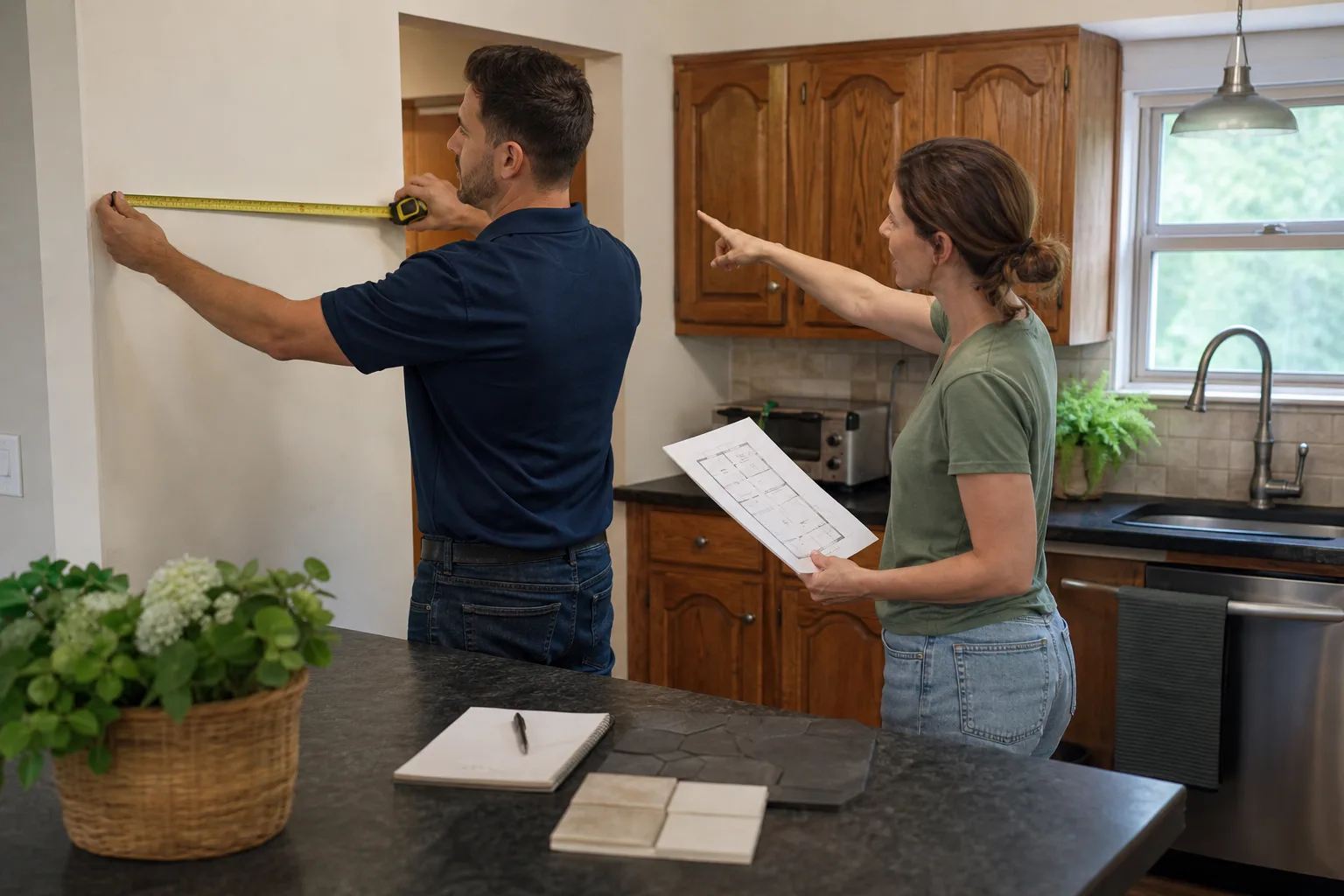
Free written scope consultation - allowances, timeline, and change-order rules on paper before a single trade is scheduled
Techo-Bloc Roofing: The Riverside Owner’s Guide
If you’re looking for Techo-Bloc roofing parts in Riverside, we stock and install the full line of Techo-Bloc roofing, paver, and wall components, with typical installed repairs running $400 – $1,800 depending on the failure. Most Riverside homeowners discover a problem the same way: a cracked cap, a shifted block after a heavy rain, or water staining on the underside of a covered patio. We carry the parts, we match them to your existing Techo-Bloc series, and we get the repair done without a mystery invoice at the end.
Before we get into models and pricing, know this: Bradford Remodeling Co Riverside is an independent contractor. We’re not affiliated with Techo-Bloc, but we work with their product lines every week, and we know the compatibility traps that send DIYers back to the parts counter twice.
Here’s the quick version for anyone in a hurry: Techo-Bloc roofing components (roof caps, ridge units, and the modular blocks used in outdoor roofing and shade structures) fail most often at the joint, not in the block itself. The fix is usually a direct replacement part matched to your series, and we give you a written price before we touch anything. That’s the whole point of how we work.
Which Techo-Bloc Models This Applies To
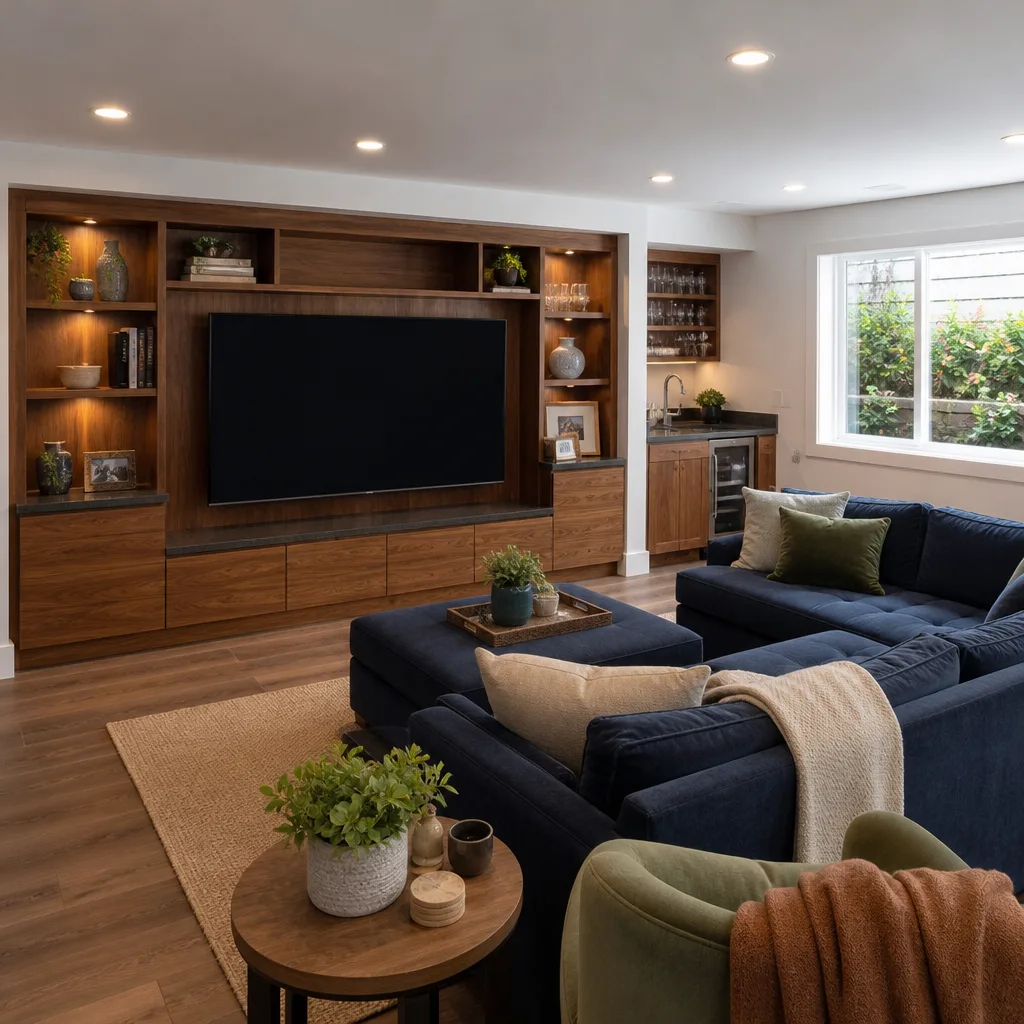
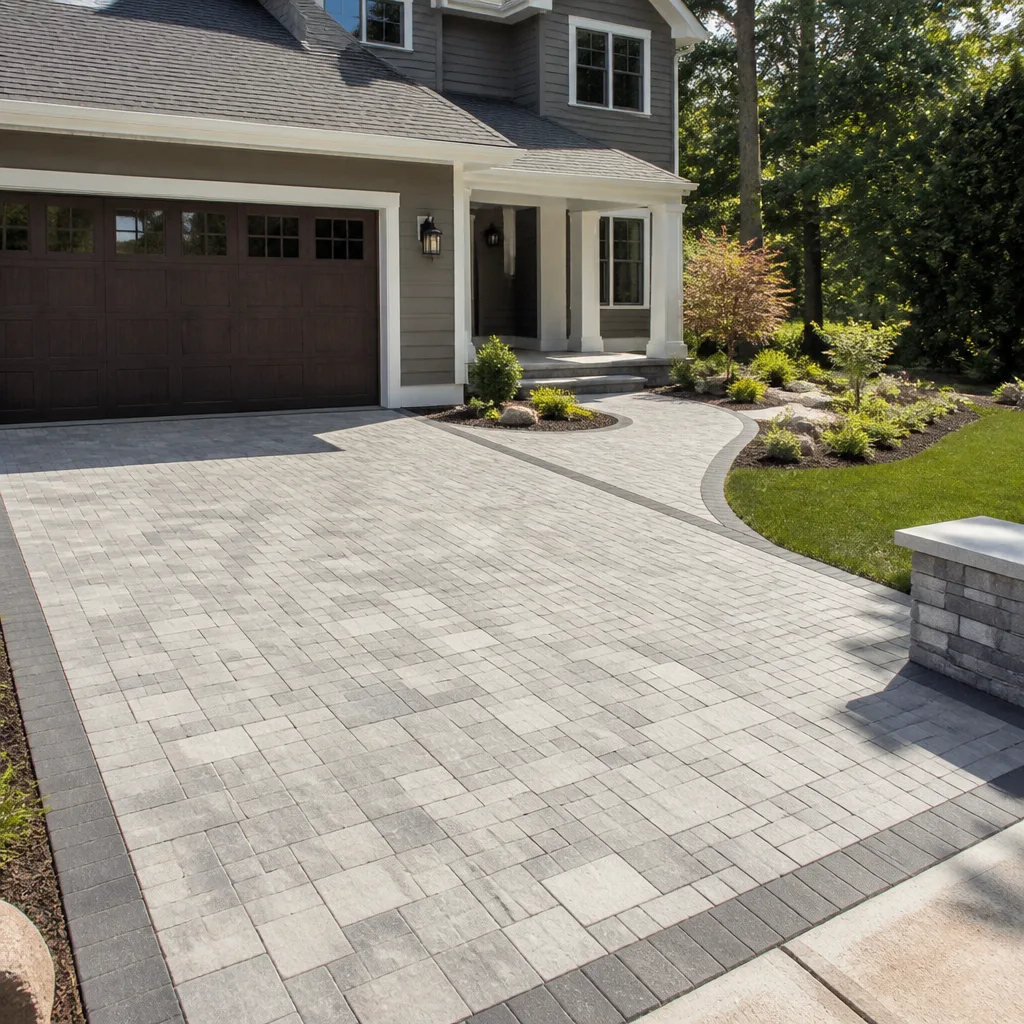
Techo-Bloc’s product catalog is deep, and their roofing and overhead applications draw from a few distinct lines. The big ones we see in Riverside backyards and covered patios are the Blu series (smooth, modern, used heavily for outdoor kitchens and shade structures), the Mista series (textured stone look, very common in Southern California), the Villagio and Delfino lines (dimensional wall and cap units), and the Semma and Borealis slabs when the job calls for a larger-format roof or canopy surface.
Here’s the compatibility gotcha most people don’t know: Techo-Bloc changes mold dimensions between production runs, and a block from a 2016 batch may sit 2 – 3mm differently than a 2021 block even in the same series. That’s small enough to miss on a showroom shelf and big enough to leave a visible seam in your roof line. We measure existing units on site, not from a catalog photo, and we match the part to the batch dimensions, not just the model name.
On the OEM vs aftermarket question for Techo-Bloc specifically: this is a case where OEM makes sense. Techo-Bloc’s color pigmentation runs through the full block, not just a surface coating, which means a genuine replacement weathers consistently with the surrounding units. Aftermarket lookalikes from Riverside landscaping supply yards are cheaper, but they’re surface-stained and fade within two Southern California summers. For roofing and overhead work, where the repair is visible from below, OEM is the call. For a buried base course, a quality equivalent is fine and costs less.
If you still have the original invoice or packing slip, look for a five-digit product code (Techo-Bloc codes typically start with the series prefix, like BLU- or MIST-). If you don’t have the paperwork, snap a photo of the top and edge profile and we can identify it from our reference library.
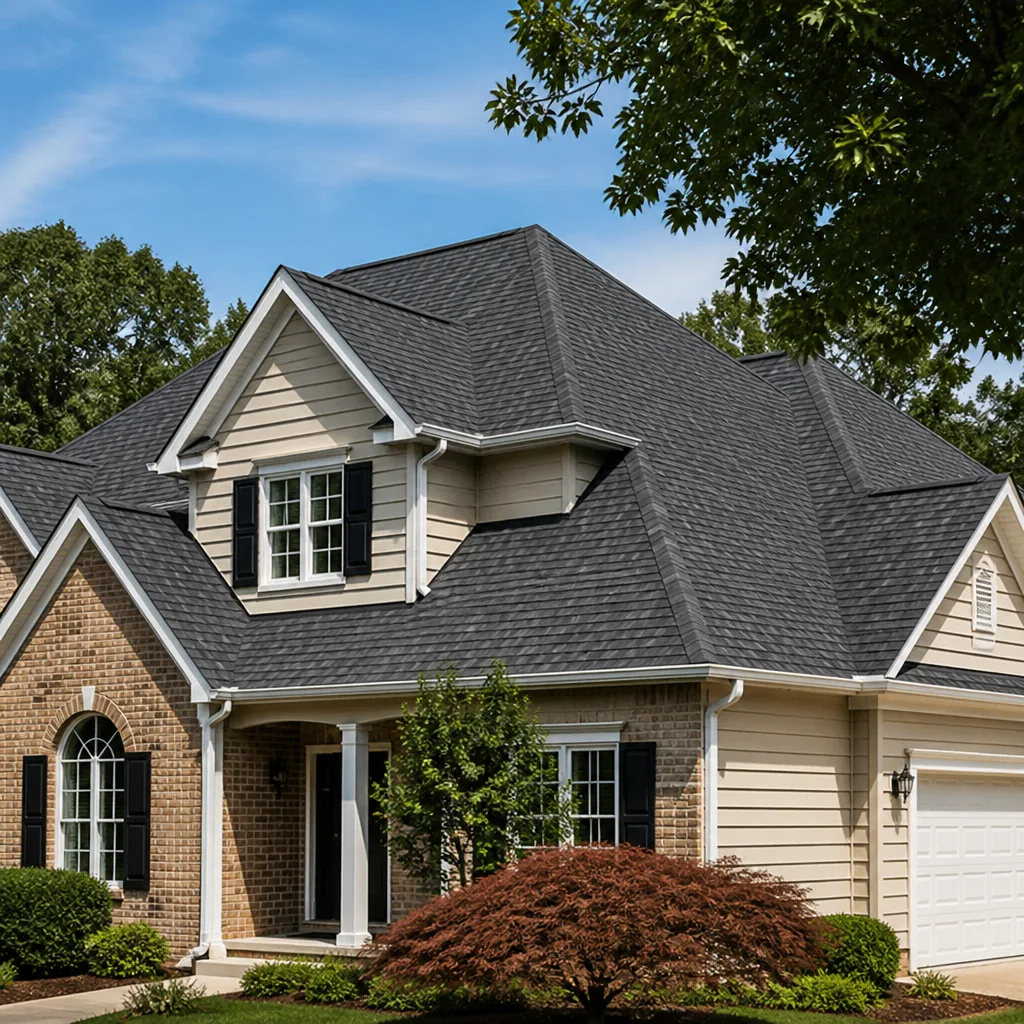
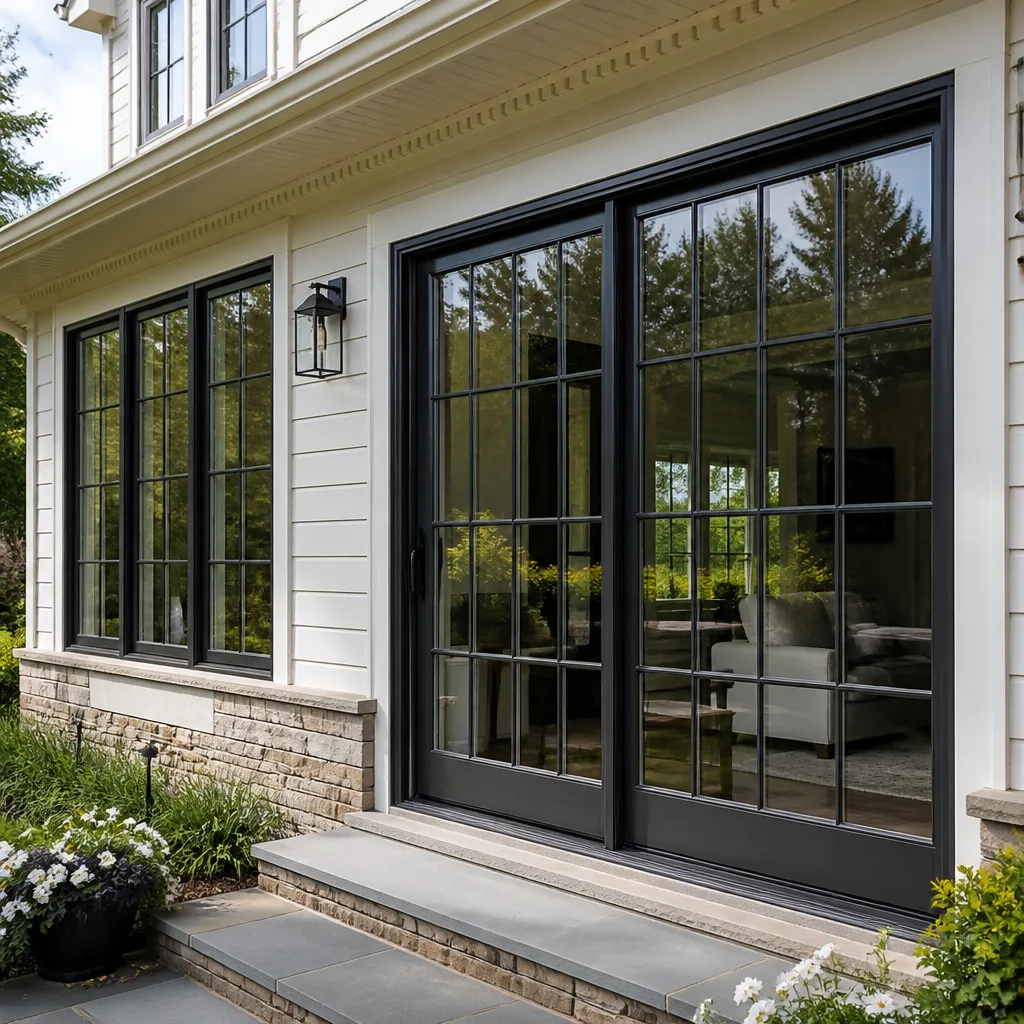
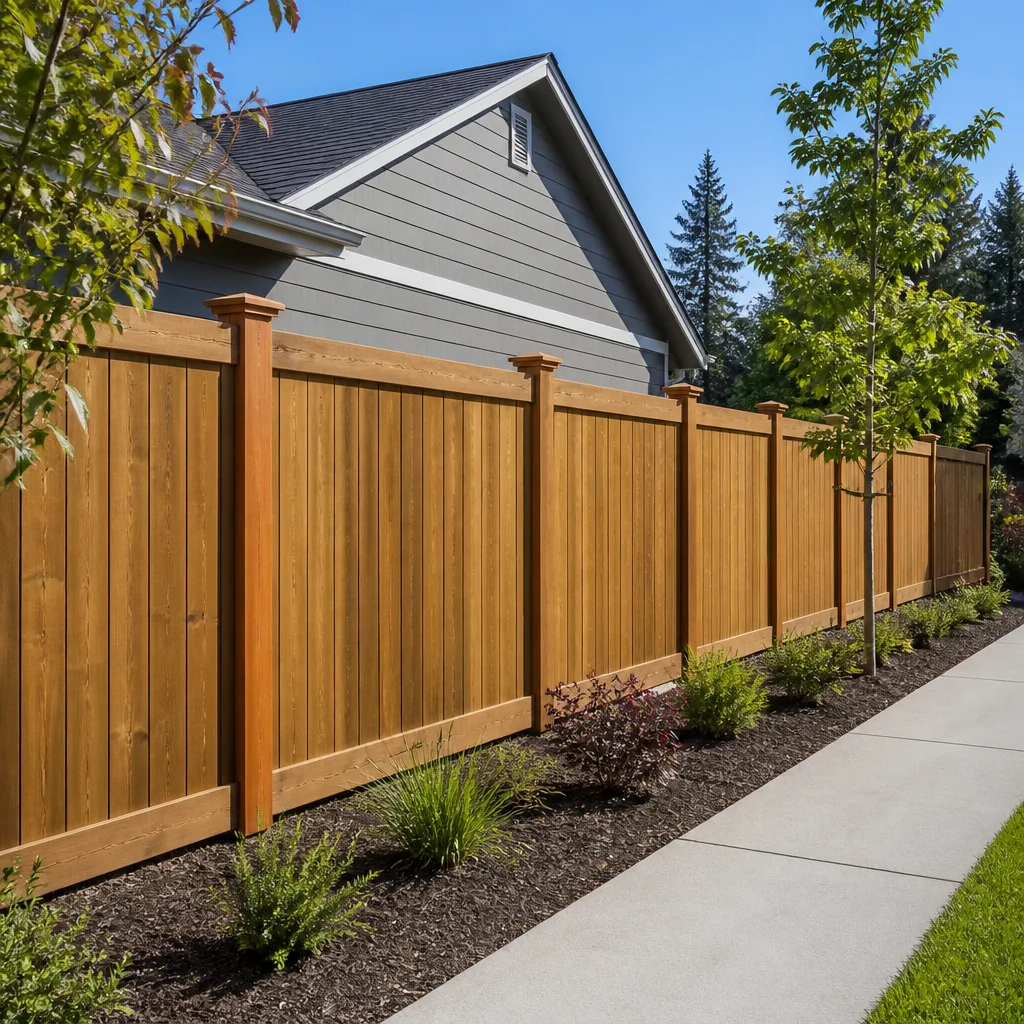
Styles & brands we work with
Signs Your Techo-Bloc Roofing Is Failing
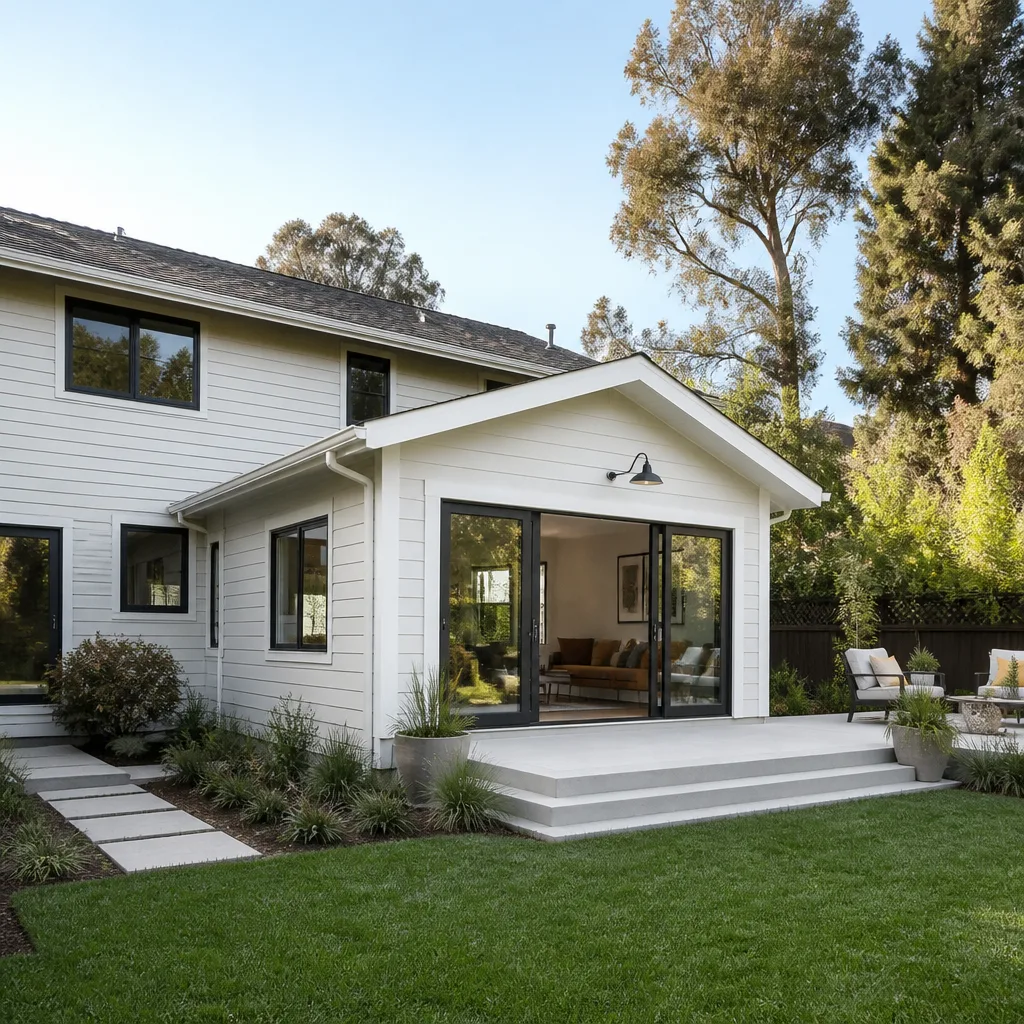
- Water staining on the underside of a covered patio or shade structure. This almost always means a roof cap or ridge unit has cracked at the joint, letting water through the top course. The crack may be invisible from above. From below, the stain is the tell.
- Visible shifting or lipping between adjacent units. One block sitting 3 – 4mm proud of its neighbor means the sand joint or the substrate beneath has failed. In Riverside, where we get heavy afternoon sun and occasional monsoon bursts, thermal expansion accelerates this.
- Crumbling edges or spalling on cap units. This is freeze-thaw damage in colder climates, but in Riverside it’s usually a salt or pool chemical issue. Chlorinated splash-out from a nearby pool eats the concrete binder over years, and the edge goes first.
- Efflorescence that won’t scrub off. White chalky residue that returns after cleaning means water is moving through the block, not around it. That’s a drainage or joint failure wearing the block from the inside out.
- A hollow sound when you tap a unit. A solid Techo-Bloc unit has a dull ring to it. A hollow tap means the bond between the block face and the structural course behind it has broken. The unit is doing nothing now except adding weight.
We see all five of these across Riverside. The pattern that worries us is the first one: the stain that shows up three months after the crack formed. By the time you see water, the joint has been failing for a while. That’s why we inspect the whole course, not just the cracked block you found.
See the difference
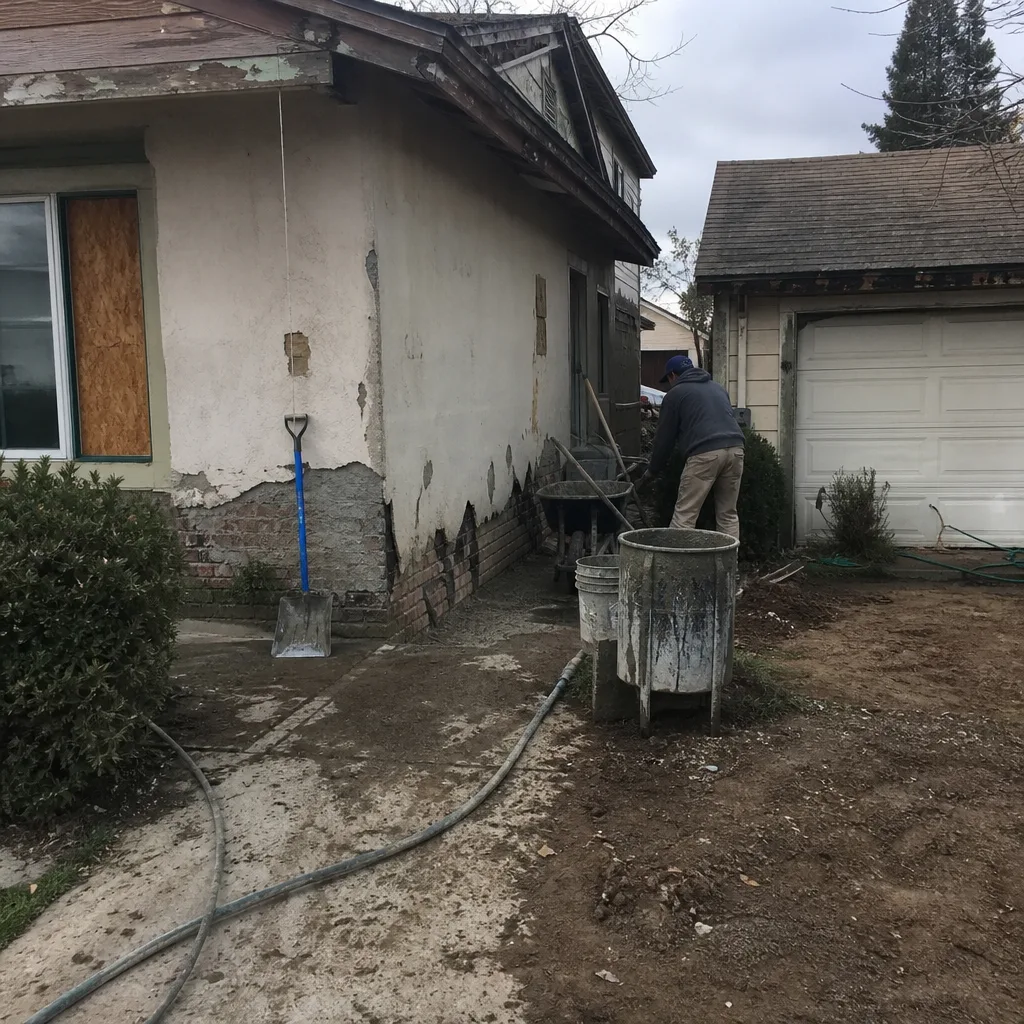 Before
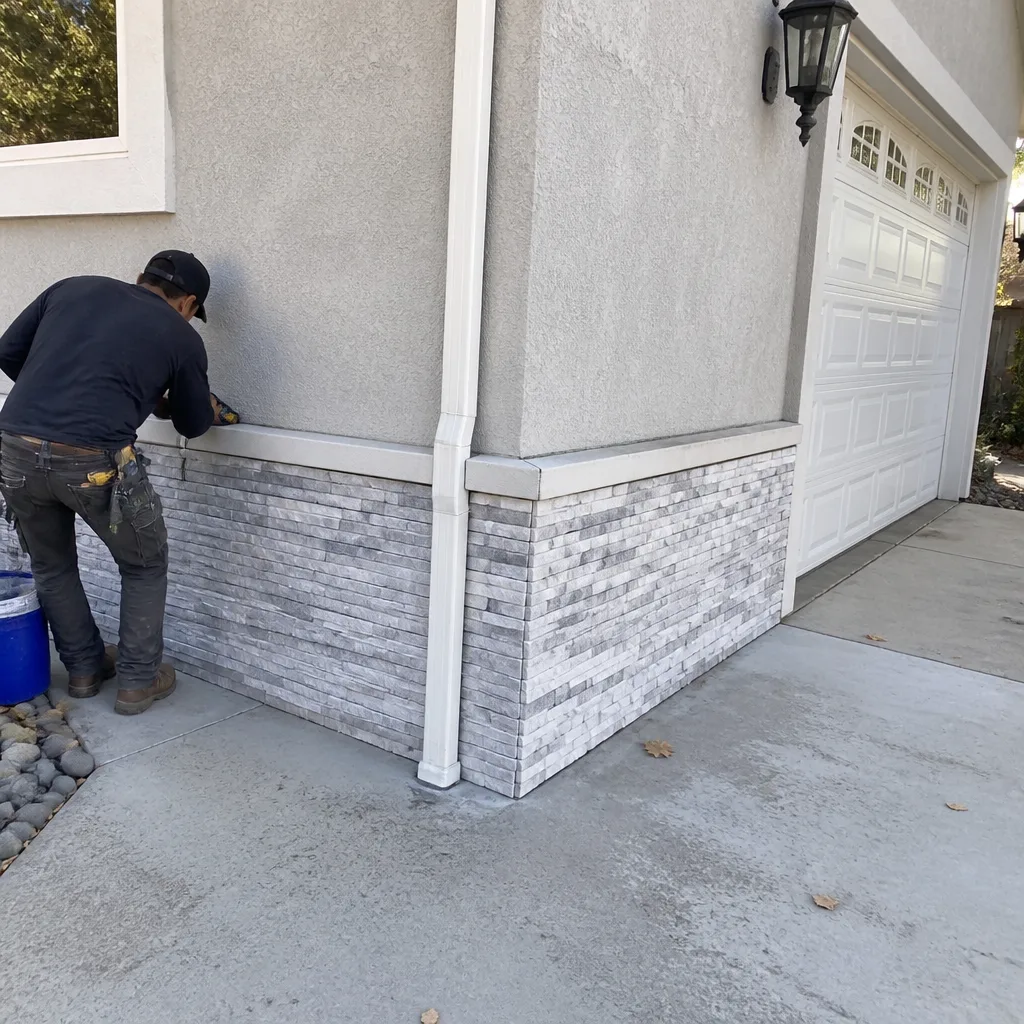 After
After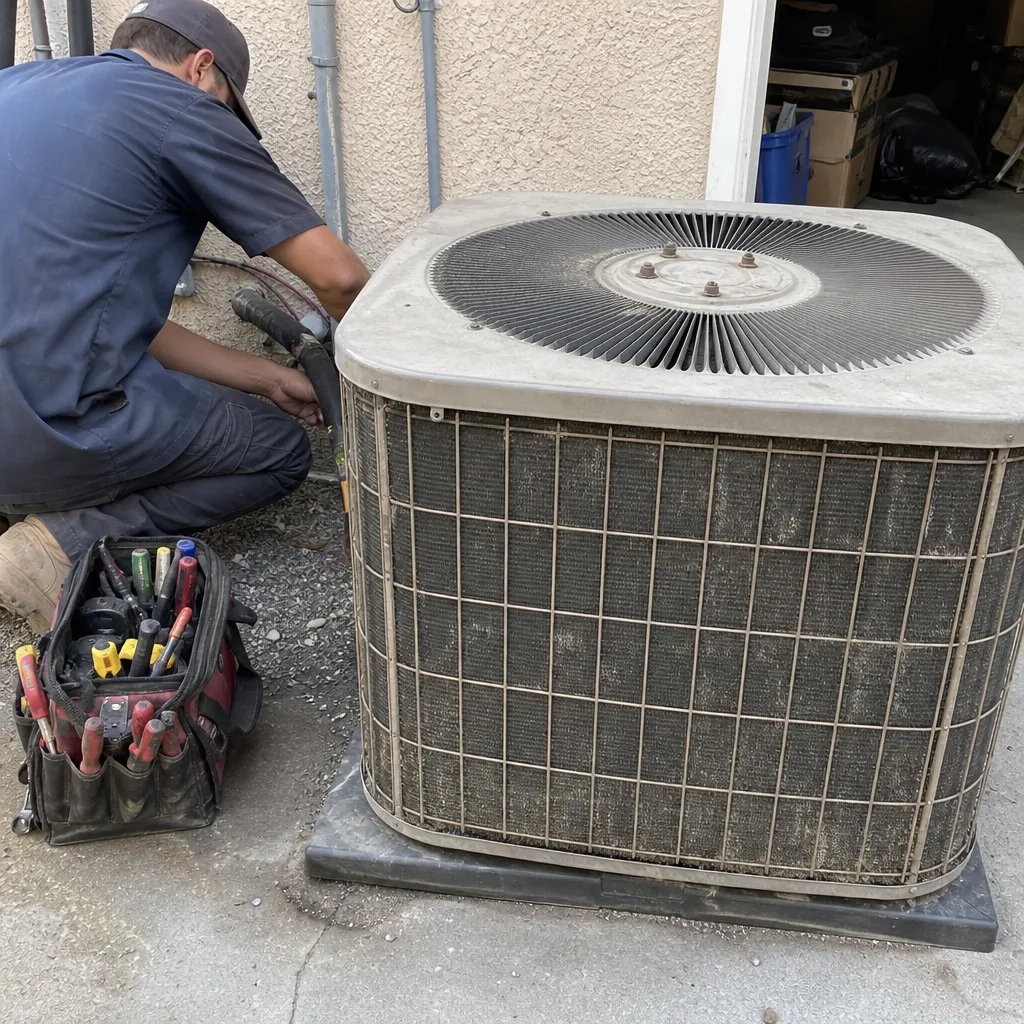 Before
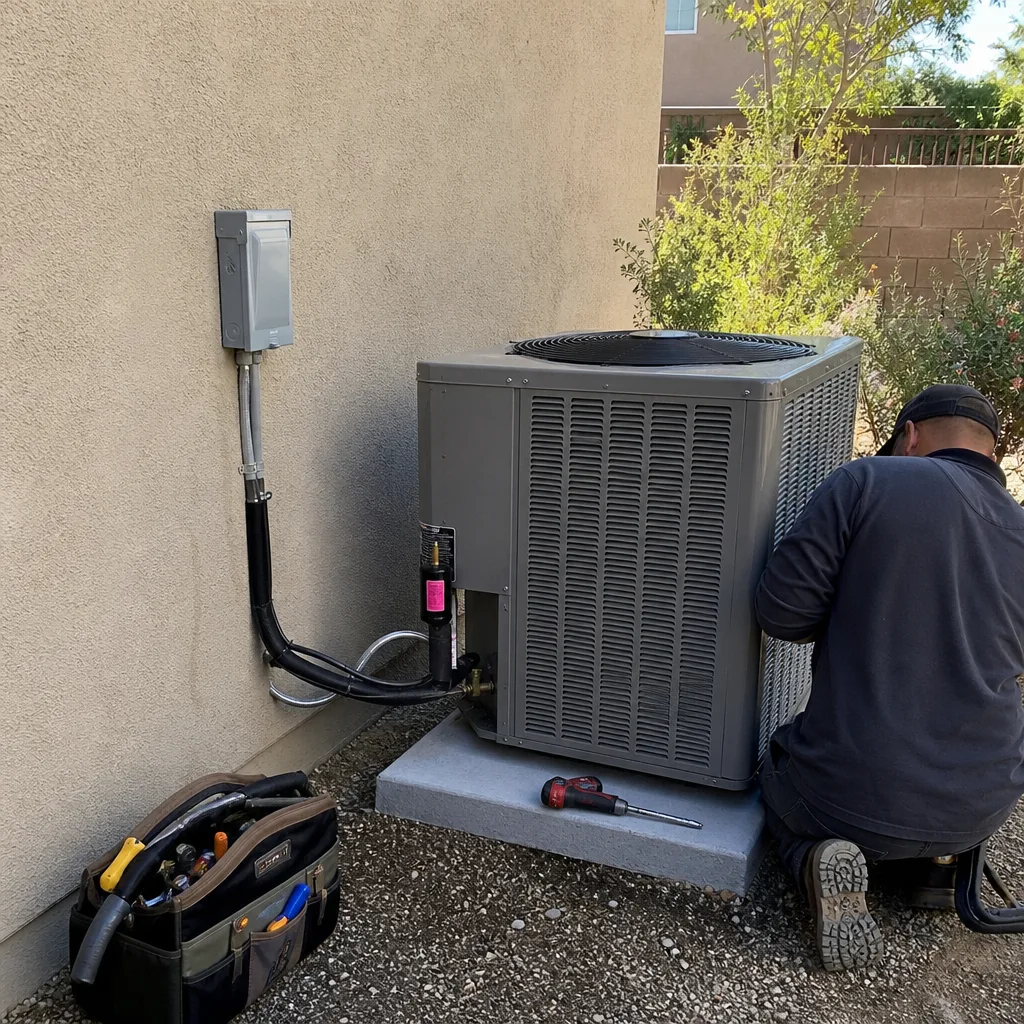 After
After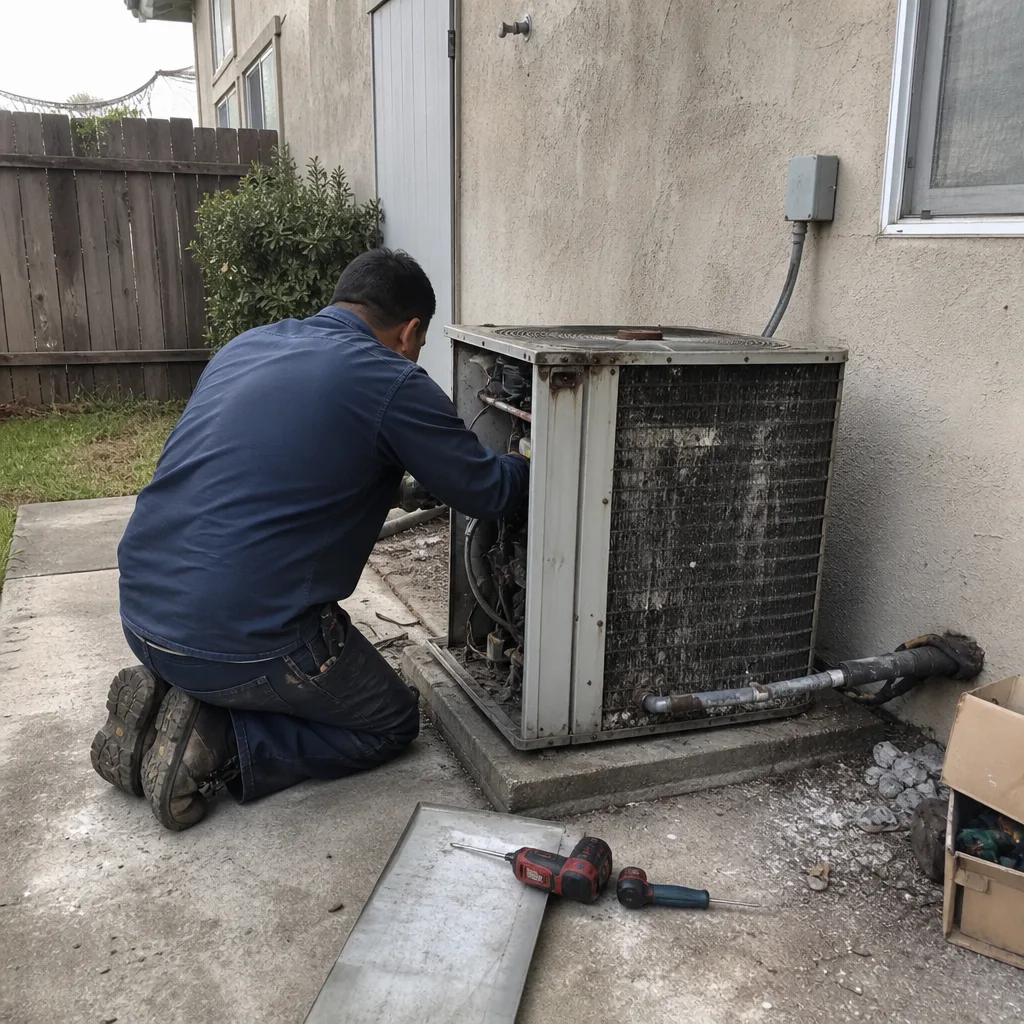 Before
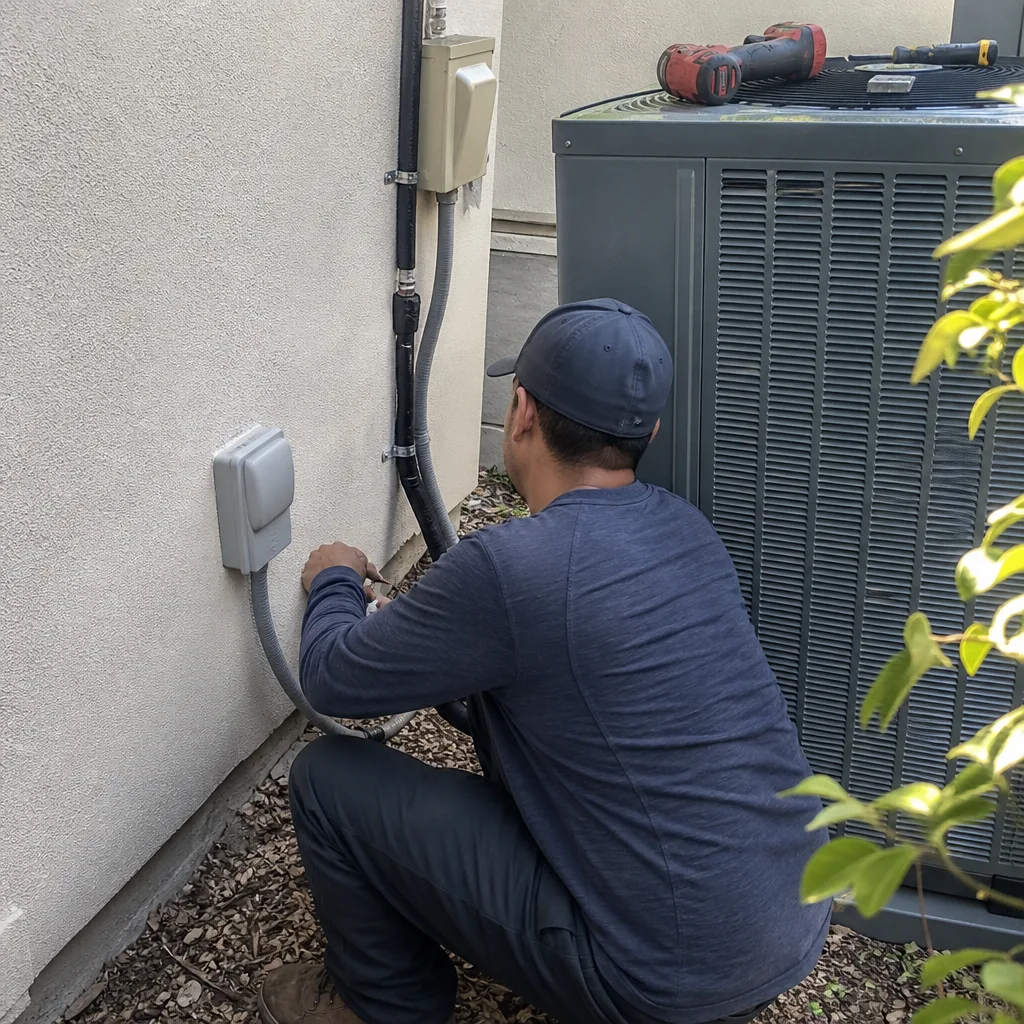 After
AfterReplacement Cost & What’s Included
For Techo-Bloc roofing and cap repairs in Riverside, most jobs land between $400 and $1,800 installed. The range is driven by three things: how many units need replacing, whether the substrate beneath them needs repair before new units go down, and whether you’re in an area of Riverside where access affects the labor (second-story patios in Hawarden Hills take more setup than ground-level work in Wood Streets).
Here’s how the numbers typically break down:
- Single cap or ridge unit replacement: $400 – $700
- Multi-unit cap course repair (up to 6 linear feet): $700 – $1,200
- Larger sections including substrate repair and joint rebuild: $1,200 – $1,800
Every quote includes the Techo-Bloc parts themselves, removal of the failed units, substrate preparation, installation, joint work, and cleanup. The substrate repair is the part that moves a job up the range, and we’ll tell you if we found damage before we ask you to approve the extra scope. You get a line-item written price before any work starts, and the number doesn’t move at the door.
All completed Techo-Bloc repair work carries the 365-Day Done Right Promise. If the repair fails within a year, Bradford Remodeling Co Riverside comes back and corrects it at no charge. That’s in writing and it’s not a sales line. It’s a condition of how we operate under The Garrison Standard.
DIY or Call Us?
There’s an honest split here. What you can safely do yourself: identify the series from the paperwork or a label, clean debris out of the failed joint, document the damage with photos, and keep foot traffic off the affected area. That’s real, useful work that saves us time and you money on the estimate visit.
What goes wrong in DIY: using a standard concrete adhesive instead of a flexible polyurethane joint compound (the block expands in Riverside heat and the rigid glue cracks within one season), mismatching batch dimensions, and failing to fix the substrate so the replacement unit fails the same way in eighteen months. Roof work adds height and ladder risk to the equation. If the failure is overhead, don’t do it yourself. Falls from ladder height account for a significant share of home injuries every year, and a teetering block over your head is not the place to learn on the job.
If you want a straight answer on whether your repair is DIY-sized or crew-sized, call (424) 567-8472. We’ll tell you what we’d do, and we won’t charge you for that conversation.
FAQs
Techo-Bloc roofing and cap units typically last 25 – 40 years in Riverside’s climate, with the joint material and substrate failing well before the block itself. The block will outlast the installation. Expect to repair joints every 7 – 10 years and replace blocks only when physical cracking or spalling occurs. Call (424) 567-8472 if you want us to assess whether your units are the problem or the installation around them is.
A surface crack can sometimes be patched with a color-matched polyurethane filler, but the patch will be visible and will fail before the surrounding block. For roofing and cap units that are visible from below, replacement is the durable answer. For low-visibility base course blocks, patching buys you time. We’ll give you the honest recommendation either way, with the price difference itemized.
Most single-unit and small-course repairs are completed in one visit, typically 3 – 5 hours including substrate prep and cleanup. Larger sections requiring substrate rebuild can run a full day or two. You’ll know the timeline before we start, and it’s in the written scope.
We keep the most common Techo-Bloc cap and ridge units on the truck for the series we install most in Riverside, including Blu and Mista. Odd batch sizes or less common series (Villagio, Semma) are special-ordered from Techo-Bloc distributors, usually arriving within a week. We’ll match your existing batch before we place the order, so there’s no guesswork at installation.
No. The price we put in writing before we start is the price you pay. If we open the substrate and find hidden damage, we stop, show you what we found, and give you a new written scope for approval before we touch it. No surprise invoices, no numbers that move at the door. That’s The Garrison Code in practice.
Written by Curtis Lane, Owner, Bradford Remodeling Co Riverside at Bradford Remodeling Co Riverside, serving Riverside and nearby areas.