Free written scope consultation - allowances, timeline, and change-order rules on paper before a single trade is scheduled
Cambridge Pavers Driveway & Pavers: The Riverside Owner’s Guide
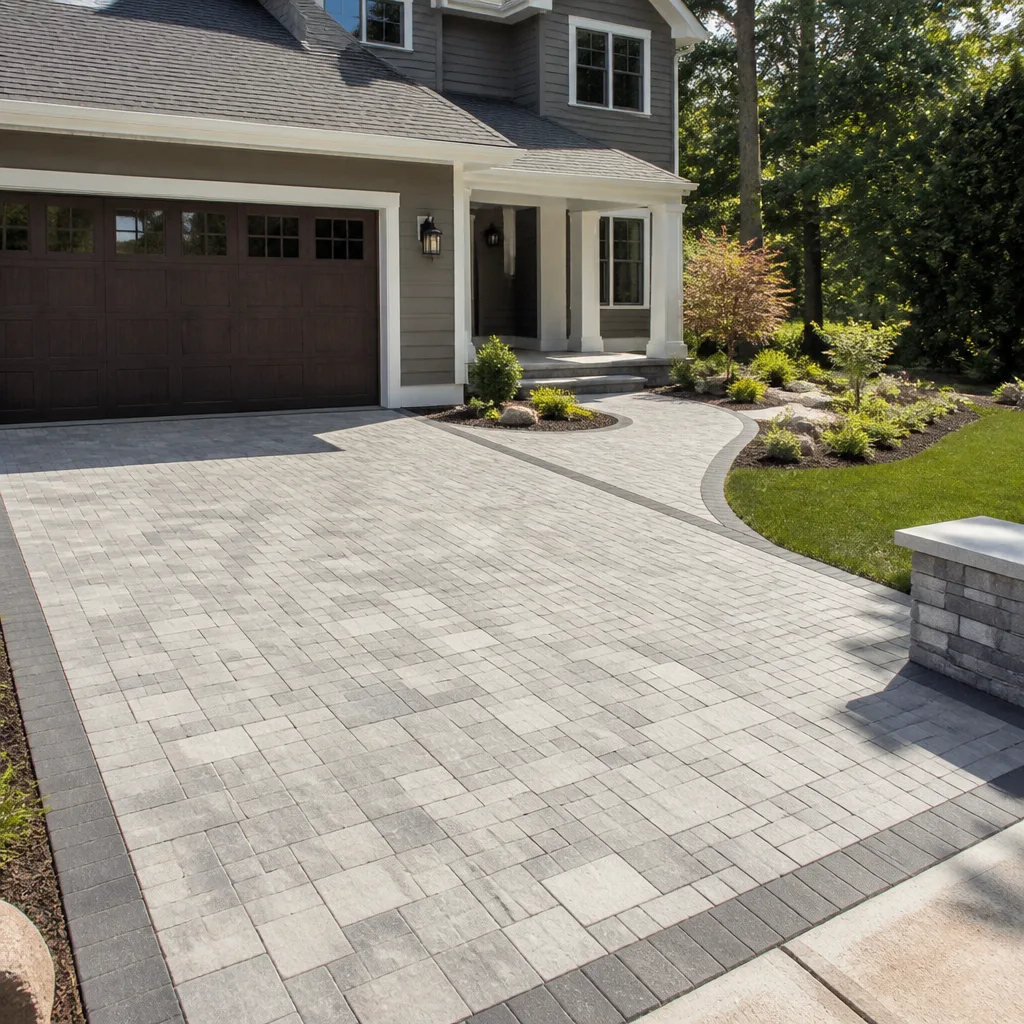
Cambridge Pavers driveway and paver installation in Riverside typically runs $7,000 to $18,000 for a standard two-car driveway, with the final number depending on square footage, the specific Cambridge product line you pick, and what’s hiding under your existing surface. We keep a working inventory of Cambridge-compatible edge restraints, joint sand, and base materials on the truck, and we can match most Cambridge paver profiles from the Maytrx, Ledgestone, and RoundTable collections without a special order. Most Riverside homeowners discover they have a problem when pavers start shifting after winter rains, or when an edge row gives way and the driveway starts creeping into the planting bed.
We’re an independent Riverside contractor, not a Cambridge Pavers distributor. That means we tell you the truth about your existing install: if the pavers are sound but the base failed, we say so. If the pavers themselves are cracked or spalled, we price the replacement honestly instead of selling you a full rebuild you don’t need.
Which Cambridge Pavers Models This Applies To
Cambridge makes three paver families that show up most often in Riverside driveways: the Maytrx line (a dimensional, modular paver with a tighter joint), the Ledgestone series (a tumbled, softer-edge paver that reads more like natural stone), and the RoundTable collection (larger-format pavers with a more contemporary face). Each line uses different sizing and joint spacing, and they’re not interchangeable. If your driveway was built with Maytrx 6×9 pavers, you can’t drop in a Ledgestone 6×6 unit and expect the pattern to hold.
Here’s the gotcha most Riverside owners hit: Cambridge changes color runs and finish treatments over time, and a paver bought in 2019 won’t always match a paver from the same named color today. Sun exposure in Riverside fades the surface too, so even a perfect color-match from the factory will look slightly different next to an in-place paver. For visible repair areas, we’ll pull pavers from a less visible section of your own driveway (behind a gate, under a carport) and lay the new units there, so the patch area blends. We also source quality aftermarket edge restraints, geotextile, and polymeric joint sand that perform as well as Cambridge-branded accessories at a lower materials cost. When OEM matters – for warranty-sensitive commercial work or HOA-mandated specs – we order direct.
To identify your paver, look for the Cambridge stamp on the bottom of a lifted unit, or measure it: Maytrx pavers run 6×6, 6×9, and 9×9; Ledgestone is typically 6×6 and 6×9 with a tumbled edge; RoundTable units start at 8×8 and go up. If you can’t find the stamp, bring a paver to our shop or send a photo with a tape measure next to it, and we’ll match the line.
Styles & brands we work with
Signs Your Cambridge Pavers Driveway & Pavers Is Failing
- Edge rows pushing outward. The outside paver rows are running away from the driveway. That means the edge restraint failed or was never installed properly. In Riverside, the freeze-thaw cycle is rare, but our clay-heavy soils expand and contract with winter moisture, and that movement pops cheap plastic edging.
- Low spots holding water after rain. A paver driveway should drain. If you’ve got puddles that stick around for a day, the base under the pavers has settled or was never compacted to spec. Water sitting on Cambridge pavers accelerates surface wear and grows moss in shaded Riverside yards.
- Individual pavers rocking underfoot. Step on a paver and it tips. That’s a bedding sand failure under that unit, usually from base settling or from a joint-sand blowout that let the paver work loose. One rocking paver is a fix; a field of them means the bedding layer is done.
- Joint sand disappearing or weeds rooting through. Polymeric sand should lock the joints for years. If your joints are empty, the pavers are shifting against each other, chipping edges, and letting organic material take root. In Riverside’s dry heat, polymeric sand will eventually break down from UV exposure and traffic; Cambridge driveways in full sun go through joint sand faster than shaded ones.
- Surface spalling or color loss in bands. Cambridge pavers are manufactured with a face-mix that gives them their color. When that top layer delaminates or turns chalky-white in patches, the paver itself has failed. This is a materials issue, not an installation issue, and it usually shows up first in high-traffic wheel paths.
See the difference
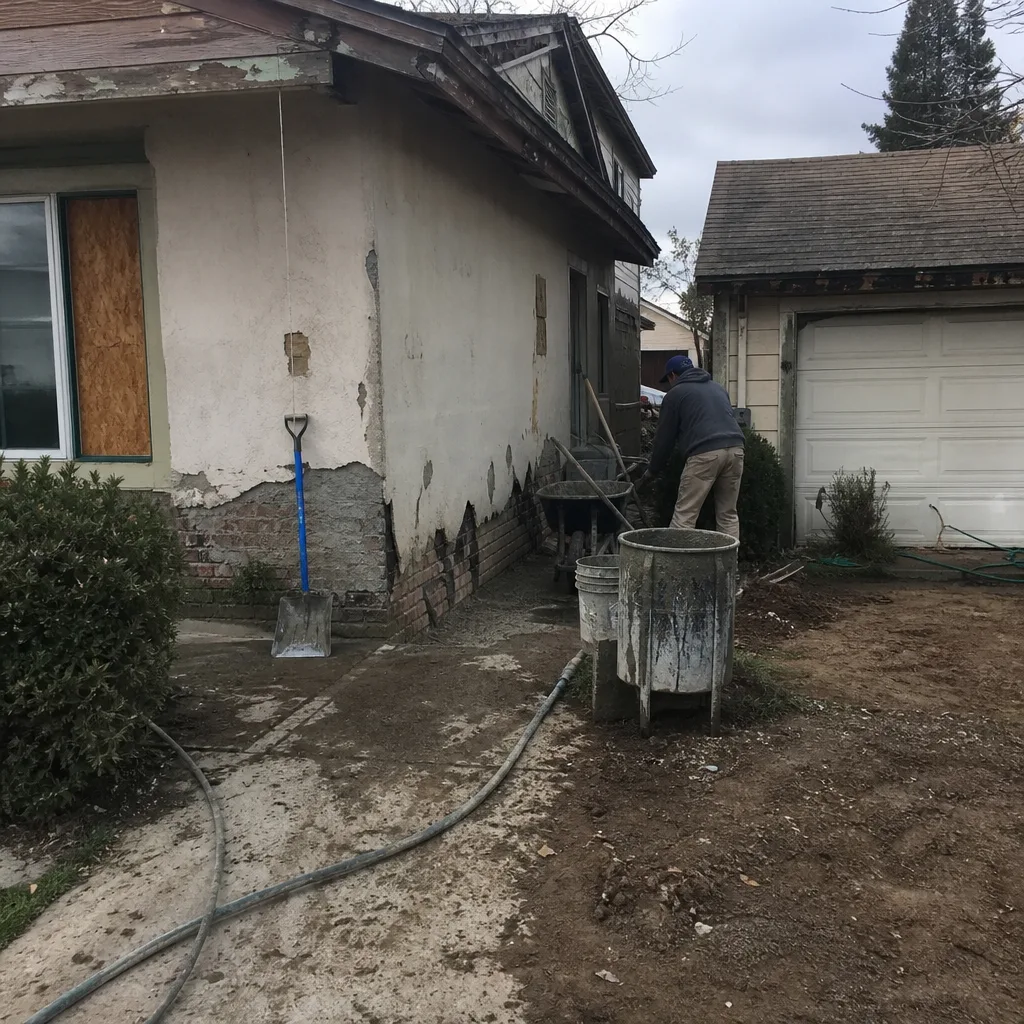 Before
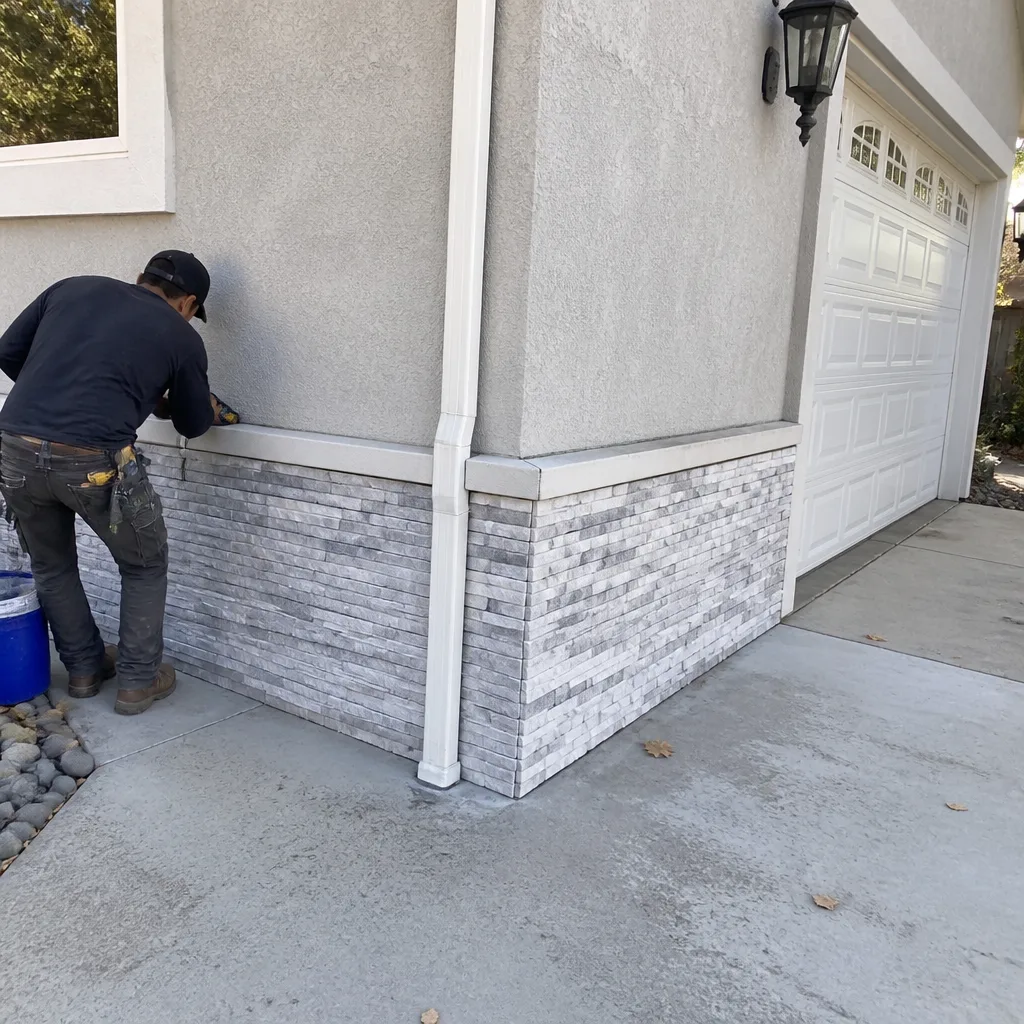 After
After Before
 After
After Before
 After
AfterReplacement Cost & What’s Included
For a full Cambridge paver driveway replacement in Riverside, you’re looking at $7,000 to $18,000 installed. A partial repair – pulling up a failed section, recompacting the base, re-laying the existing pavers, and re-sanding the joints – lands between $1,500 and $4,500 depending on square footage and access. A simple edge-restraint repair with re-setting a few rows runs $400 to $1,200.
The range moves on four things: total square footage, how much base material needs to come out and go back in, whether we can reuse your existing pavers or need new Cambridge units, and site access. A driveway we can reach with a Bobcat and dump trailer is cheaper than a backyard patio we have to hand-carry material into. Every bid from us is a written line-item price before any work starts – labor, materials, base rock, sand, haul-off, and disposal are all on the page. No change orders at the door. The work carries our 365-Day Done Right Promise: if the install fails inside a year, we come back and make it right at no charge.
Call (424) 567-8472 and we’ll walk the driveway, take the measurements, and give you a straight number.
DIY or Call Us?
Concrete pavers themselves aren’t dangerous to handle – this isn’t a tension-spring or electrical situation. What gets Riverside homeowners in trouble is the base work. You can re-sand joints yourself. You can reset a single rocking paver with a bag of bedding sand. But if your problem is a settled base, a failed edge, or drainage that’s undermining the whole section, what you’re really buying is excavation, compaction, and grading, and that needs a plate compactor, a level transit, and someone who knows when the base is actually done. We’ve torn out enough DIY bases to know the pattern: the top looks fine, the pavers sit flat for six months, then the first rain hits and the whole thing sinks a half inch in the middle.
If you’re not sure what you’ve got, call (424) 567-8472. We’ll tell you over the phone whether it sounds like a joint-sand weekend job or a base excavation, and we won’t charge you for the honesty.
FAQs
Cambridge pavers in Riverside’s climate typically last 25 to 40 years before the surface shows meaningful wear, but the base under them often fails in 15 to 20, especially on clay soil with poor drainage. You’ll usually rebuild the base once before you ever need to replace the paver units themselves. Call (424) 567-8472 and we’ll tell you which one your driveway needs.
A single cracked paver can usually be lifted and swapped in under an hour if we have a matching unit. The real question is whether the crack came from impact (repairable) or from base movement under load (the base will crack the next paver too, and the repair won’t hold). We’ll identify the cause before quoting the fix.
Most partial repairs – edge rows, a sunken section, joint sand renewal – are a one to two day job. A full driveway rebuild runs three to five days, including base excavation, compaction, paver installation, and a final joint sand sweep. We sequence the job so your driveway is usable again the day we finish.
We keep common Cambridge profiles and matching base materials in our Riverside yard, and we can source any current Cambridge line from local distributors within days. We also keep edge restraints, geotextile, and polymeric joint sand in stock for repairs. Older discontinued colors may require a match strategy – we’ll walk you through pulling pavers from a hidden section of your own install so the repair doesn’t show.
Written by Curtis Lane, Owner, Bradford Remodeling Co Riverside, serving Riverside and nearby areas.