Free written scope consultation - allowances, timeline, and change-order rules on paper before a single trade is scheduled
James Hardie Bathroom Remodeling: The Riverside Owner’s Guide
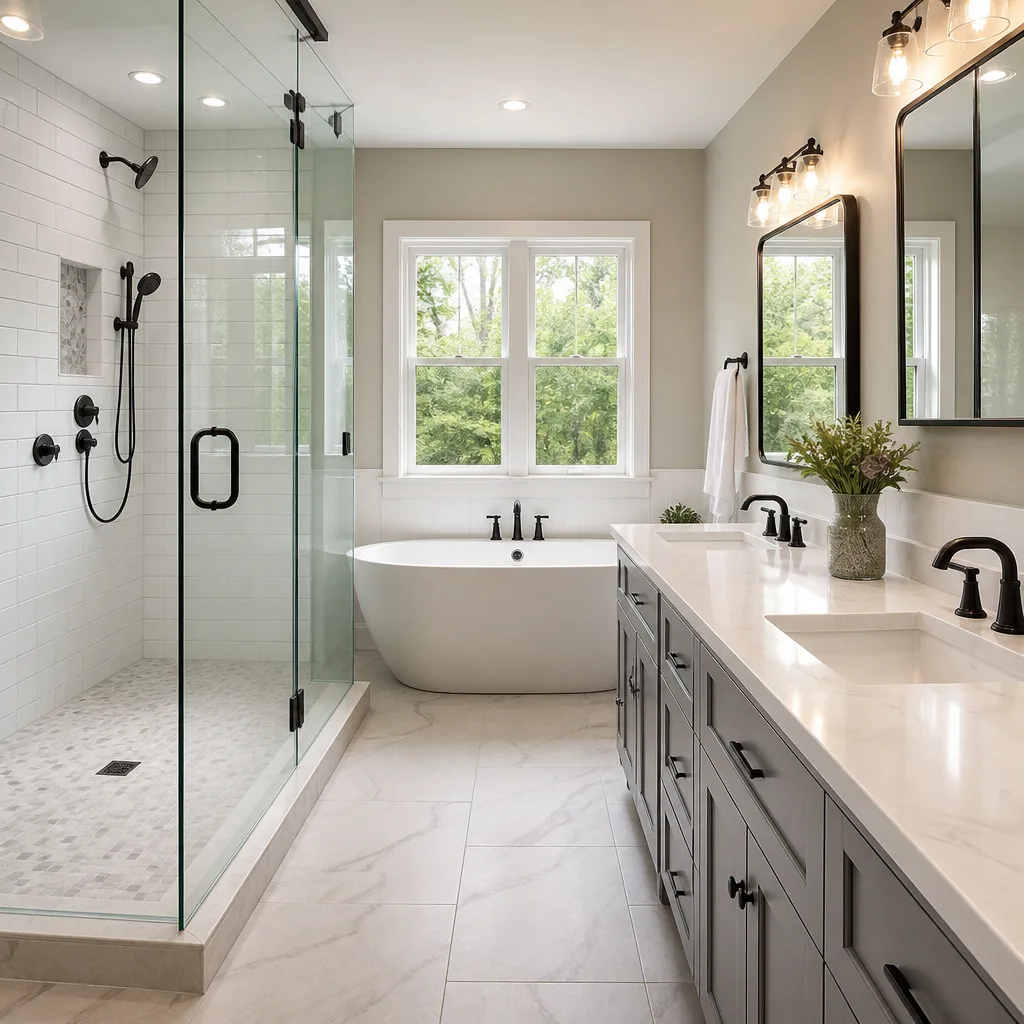
A full James Hardie bathroom remodel in Riverside typically runs $9,000 to $28,000 installed, depending on the size of the wet zone, the condition of the substrate, and whether you’re moving plumbing. Most Riverside homeowners we meet are not here because the HardieBacker itself failed. They’re here because the tile over it cracked, the grout lines went soft, or water found its way behind the board and the wall started moving. James Hardie cement board is one of the few products in a bathroom that should outlast the tile on top of it – and when we open a wall and find it compromised, the real problem is almost always what was installed behind it or how the seams were handled. If you’re seeing loose tile, efflorescence, or a musty smell that won’t leave, the board is telling you something. We stock James Hardie products on our trucks in Riverside and can diagnose the failure the same day we walk the site.
Which James Hardie Models This Applies To
In bathroom remodels, the James Hardie product you’re dealing with is HardieBacker cement board, and it comes in two common thicknesses: 1/4-inch for floors and countertops, and 1/2-inch for walls and tub surrounds. The 1/2-inch wall board is what we pull out of most Riverside bathrooms built or remodeled in the last twenty years. HardieBacker is also sold as a 3×5 sheet and a 4×8 sheet, and the 3×5 is the one we see in older tract homes around the Wood Streets and Canyon Crest, because it was easier to maneuver through a 30-inch door. Here’s the compatibility gotcha most homeowners miss: HardieBacker is not waterproof. It’s water-resistant. The board itself won’t break down when wet, but water passes through it unless a surface-applied membrane or a moisture barrier went up behind it during the original install. When we see a Riverside bathroom with HardieBacker that’s been spongy or discolored for years, nine times out of ten there was no barrier, and the framing behind it has been soaking up shower water the entire time. On the OEM-versus-aftermarket question: James Hardie does not license third-party cement board as “HardieBacker equivalent.” There are other cement boards on the market, but if the original spec called for James Hardie and you’re matching tile transitions or warranty language, we install actual HardieBacker, not a substitute. Curtis Lane keeps the spec sheets in his truck because no two walls are built the same, and the part number stamped on the board edge matters when you’re matching thickness at a transition.
Styles & brands we work with
Signs Your James Hardie Bathroom Remodeling Is Failing
- Tile is cracking along a straight line, not a spider web. That straight line usually follows a HardieBacker seam. If the installer taped and mudded the seam with drywall compound instead of the alkali-resistant mesh tape James Hardie specifies, the joint fails under moisture and movement. The tile cracks exactly where the board joint flexes.
- Grout turns darker in one vertical band and won’t dry out. Water is wicking through the board at a failed seam or fastener point. The board itself feels solid, but moisture is traveling behind it. In Riverside’s dry heat, a wall that stays damp for more than a day after a shower is a wall with water coming from behind.
- You can push the tile and feel it give, even a millimeter. HardieBacker should be bedded in thinset and mechanically fastened to studs. If the original installer skipped the thinset bed and just screwed the board up, the board flexes between screws, and the tile eventually pops loose. This is the number one shortcut we find when we open a Riverside bathroom that failed within five years of a remodel.
- The bottom edge of the board swells or crumbles where it meets the tub deck or shower pan. James Hardie specifies a gap above the tub flange, and the board should never sit in standing water. When it does, capillary action pulls moisture up the board and the lower edge starts to break down. We see this constantly in Riverside homes where the original shower pan was set first and the board was dropped on top of it.
- You get a persistent musty smell that no amount of bleach fixes. That smell is not the HardieBacker. It’s the wood framing behind the board holding moisture and growing mold. The board was never the waterproof layer. By the time you smell it, the studs have been wet for a long time.
Replacement Cost & What’s Included
If the failure is localized – one wall, one tub surround – a James Hardie bathroom repair in Riverside typically runs $3,000 to $8,500. That covers demolition to the studs, replacement of any rotted framing, new HardieBacker installed to spec with taped and mudded seams, a surface-applied waterproofing membrane, and new tile to match or coordinate. A full bathroom remodel with James Hardie products throughout the wet zones runs $9,000 to $28,000, and the spread comes down to square footage, whether the shower is a prefab pan or a custom mud bed, and how much tile and glass you’re putting back. Every Bradford Remodeling project gets a written price before any work starts – not an estimate, a fixed number with the scope itemized line by line. Parts and labor are broken out in the proposal, and the 365-Day Done Right Promise covers the work in writing: if the install fails within a year, we come back and correct it at no charge. That’s The Garrison Standard in action. Straight number, real scope, no surprises at the final walk.
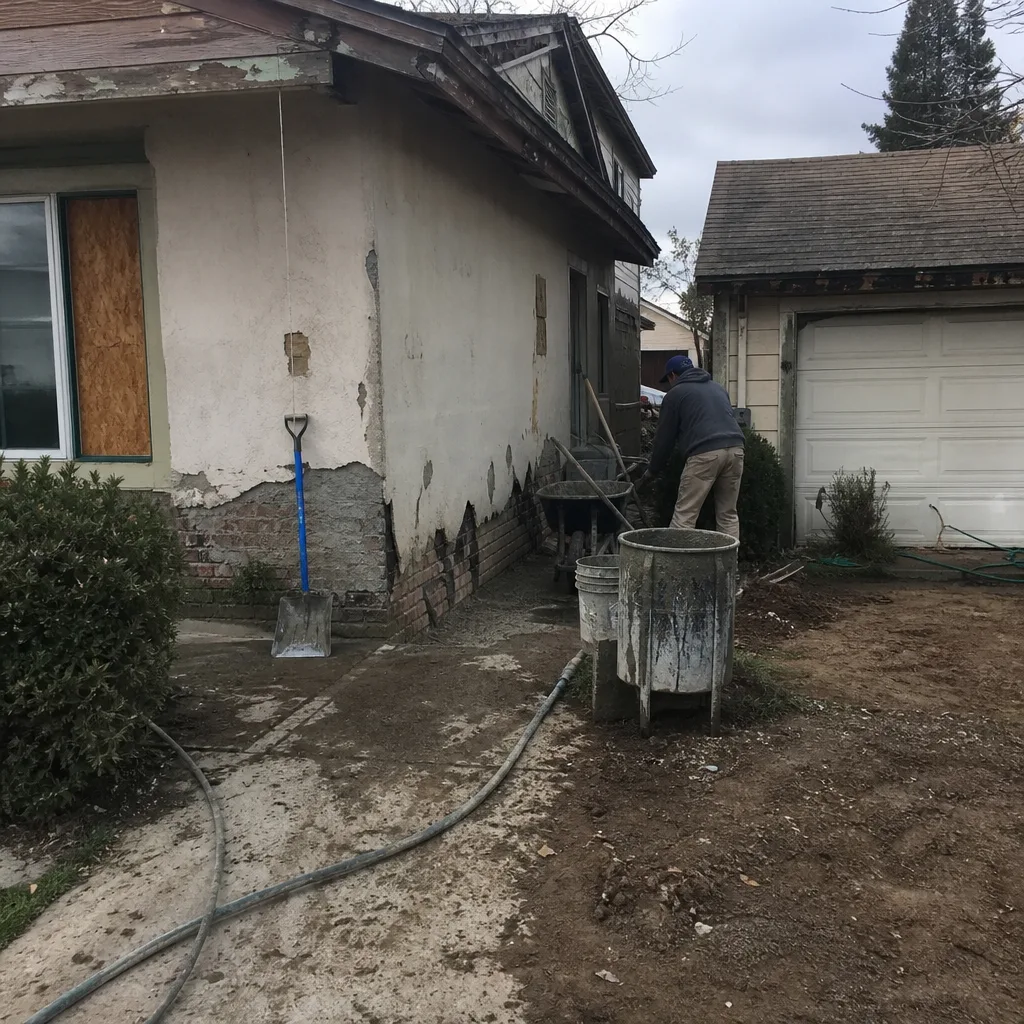
See the difference
 Before
 After
After Before
 After
After Before
 After
AfterDIY or Call Us?
The honest answer: HardieBacker is not dangerous to handle the way a garage-door spring or a live panel is. You can cut it, screw it, and hang it without risking your life. But the failure we fix most in Riverside is not the board – it’s the waterproofing system around it. A homeowner can absolutely hang cement board, tile a wall, and make it look right on a Saturday. What most can’t do is get the seam tape, fastener spacing, membrane overlap, change-of-plane joints, and tub-flange gap all correct enough that the wall stays dry for twenty years. That’s where DIY goes wrong, and you won’t know it went wrong until the tile cracks or the studs rot three years from now. If you’ve already got the wall open and you’re looking at damaged board, call us before you close it back up. We’ll tell you what we see at (424) 567-8472, and if it’s a two-hour correction, that’s what we’ll quote. We’re not in the business of padding scope to make a proposal look impressive.
FAQs
Installed correctly with proper waterproofing, HardieBacker should last the life of the bathroom – thirty years or more. Riverside’s low humidity and hard water don’t affect the board itself, but hard water scale builds up on the tile and grout above it, and that’s where most failures start. When we do open up a properly installed HardieBacker wall two decades in, the board is usually still solid. The failures are almost always installation-related, not product-related.
Yes, and we do it regularly. If the damage is contained to one wall or a corner, we remove that section to the nearest stud, match the HardieBacker thickness, re-tape the seams correctly, apply the waterproofing membrane, and re-tile. The challenge is blending the new tile with the existing. If the bathroom is older than ten years and the tile is discontinued, we’ll go over your options before you commit to a number. Call (424) 567-8472 and we’ll walk the site and tell you straight whether a surgical repair makes sense or a full redo is the better money.
A single-wall repair in Riverside typically takes three to four working days, including demolition, any framing correction, board installation, waterproofing, tile, and grout. That’s not three days of people standing around – it’s three days of staging: the membrane needs cure time, the thinset needs cure time, and the grout needs cure time. A full bathroom remodel runs two to five weeks depending on scope. We sequence the work so the rough-in, the dry-out time, and the finish trades don’t collide. Curtis is known for tight sequencing – subs show up when they’re supposed to, and the punch list gets closed before he calls the project done.
We keep 1/2-inch and 1/4-inch HardieBacker on our trucks and in our Riverside material staging, along with the alkali-resistant seam tape, the correct thinset, and surface-applied membranes. The board is not the hard part to source. The hard part is matching the tile and trim, and we handle that with our supplier network before demolition starts so the job doesn’t stall mid-way. We also stock and install KraftMaid and Wellborn cabinetry for bathroom vanities, plus Cambria and Silestone for countertop work, so the whole project runs through one crew with one written price.
Call Bradford Remodeling Co Riverside
If your James Hardie bathroom remodel has a failing wall, a cracked tile pattern, or a smell that won’t quit, call us at (424) 567-8472. We’ll send a crew to Riverside, walk the site, and give you a written price before any work starts. The 365-Day Done Right Promise covers every completed project for a full year. If it fails inside that window, we return and correct it at no charge. A live person answers the phone 24/7 – not a voicemail, not a callback queue. Bradford Remodeling Co Riverside is an independent service provider and not affiliated with James Hardie. We put every price in writing because The Garrison Standard says that’s how the job gets done right.
Written by Curtis Lane, Owner, Bradford Remodeling Co Riverside at Bradford Remodeling Co Riverside, serving Riverside and nearby areas.