Last updated October 16, 2026





Free written scope consultation - allowances, timeline, and change-order rules on paper before a single trade is scheduled
How to Hire a Construction Contractor in Riverside: A Step-by-Step Guide
The standard advice every homeowner hears – get three bids, check reviews, verify the license – stops exactly where the real risk starts. California’s Contractors State License Board lets you confirm a license in 30 seconds, yet the majority of remodeling disputes filed in Riverside County involve contractors with valid, current licenses. The license check is the floor, not the finish line. This guide picks up at bid day and walks you through the contract terms, payment schedule structures, and written guarantee language that actually separate a trustworthy contractor from one who looks trustworthy on paper. For a deeper look at the full process, see our Complete Guide to Construction in Riverside. We’re writing this from Riverside, where we’ve worked since 2004, and we’ve seen what goes wrong when homeowners skip the details.
Quick Answer
To hire a construction contractor in Riverside, start by confirming the contractor holds a CSLB license in the correct classification for your specific scope of work, then require a fixed written price and a detailed scope of work before signing anything. Structure your payment schedule so no single draw leaves you underwater – California’s Home Improvement Contract law caps the down payment at 10% of the project total or $1,000, whichever is less. Finally, verify who pulls the permit, whose name goes on it, and whether every subcontractor is licensed and insured – because that determines who is legally responsible when something goes wrong.
Styles & brands we work with




Table of Contents
- Understanding CSLB License Classifications: Why the Right Class Matters
- Structuring a Payment Schedule That Protects You
- What a Written Scope of Work Must Include to Be Enforceable
- How to Vet a Contractor’s Subcontractor Relationships
- Permit Responsibility: Whose Name Goes on the Permit and Why It Matters
- What a Real Written Guarantee Looks Like
- Red Flags That Signal Trouble Before You Sign
- What “Squared Away” Looks Like at Job Close
Understanding CSLB License Classifications: Why the Right Class Matters
The CSLB issues different license classifications that correspond to specific scopes of work. A General Building contractor – the B license – can legally perform or oversee work involving two or more unrelated trades on a single project. That’s the license you want for a kitchen remodel that includes framing, electrical, plumbing, and finish carpentry. But the B license does not automatically authorize specialized work in every case. A C-8 licensee is specifically certified for concrete work. A C-36 covers plumbing. A C-10 covers electrical. A C-54 covers tile and stone. When a B-General hires a C-8 subcontractor for your foundation work, that sub carries the specific classification – and the liability that goes with it.
Here’s the gap most homeowners miss: a contractor can hold a valid B license and still take on work that requires a specialty classification they don’t have. If the work fails, your recourse against the contractor’s bond may be limited because the work was outside their licensed classification. Before you sign anything, ask two questions. First, “What is your license classification number and class?” Second, “Which subs will be on site, and what are their classifications?” A contractor who hesitates to answer the second question is telling you something important. In our work as a General Contractor in Riverside, we provide a written list of every sub who will step foot on the property, including their license class and insurance confirmation, before the first day of work.
Structuring a Payment Schedule That Protects You
California’s Home Improvement Contract law sets hard maximums on what a contractor can collect before work begins. The down payment cannot exceed 10% of the project total or $1,000, whichever is less. That’s not a guideline. That’s Business and Professions Code section 7159, and any contractor who asks for more at signing is violating state law. After the down payment, the remaining draws must be tied to completed and verified work – never to calendar dates.
A sound payment structure for a Riverside remodel looks like this:
- Down payment: 10% or $1,000, whichever is less, due at contract signing.
- Draw 2: Due when demolition is complete and the job site is cleaned and prepared for rough-in. For a typical kitchen remodel, this represents roughly 20-25% of the total contract.
- Draw 3: Due when rough-in inspections pass – framing, electrical, plumbing, and mechanical all signed off by the City of Riverside’s building inspector. This is the point where the project is structurally complete but cosmetically unfinished. Expect to have paid about 60% of the total contract at this stage.
- Draw 4: Due when cabinets, surfaces, and fixtures are installed and the job is functionally complete, with only punch-list items remaining. You should retain 10-15% of the contract value until every punch-list item is resolved.
- Final payment: Due only after the final inspection passes, the site is cleaned, and you hold a signed written guarantee in your hand.
The key discipline: never let your cumulative payments exceed the value of the completed work on your property. If the contractor walks away, you should hold enough unpaid balance to finish the job with another firm. In Riverside, where summer heat can push exterior work into compressed schedules, some contractors front-load their payment demands. A written draw schedule tied to inspection milestones – not dates – keeps the leverage where it belongs.
We put every price and every draw schedule in writing before a single tool comes out. The number on the contract is the number you pay, and the draw schedule is part of the contract itself. There’s no reprice at the door.
What a Written Scope of Work Must Include to Be Enforceable
The scope of work is the legal heart of your contract. A vague scope – “renovate kitchen” – is unenforceable when the dispute lands in front of a mediator or judge. A specific scope, line by line, gives you the documentation to compel performance. Here are the six line items most contractor proposals omit.
- Demolition and disposal: Who is responsible for debris removal, and where does it go? In Riverside, contractors must use permitted waste facilities or document their hauling. If the contract doesn’t state who pays for the dumpster and how many loads are included, you’ll likely see a surprise line item.
- Substrate conditions: The substrate is the surface beneath your finish material – the wallboard under your tile, the subfloor under your hardwood, the sheathing under your siding. A proper scope states what happens when the substrate is damaged or out of level: who pays for the repair, and at what rate. Most contractors treat substrate repair as an “unforeseen condition” change order. A disciplined contractor writes the rate into the contract up front.
- Rough-in definition: “Rough-in” means the stage when framing, plumbing, electrical, and mechanical work is installed but walls remain open. Your scope should specify exactly what “rough-in complete” means for your project, down to which fixtures are stubbed and which boxes are set. This is where scope disputes are born.
- Permit and inspection fees: Are they included in the contract price, or billed separately? In the City of Riverside, permit fees are calculated based on project valuation. A scope that says “permits included” without a dollar figure is a scope that will cost you later.
- Material specifications by brand and model number: Not “tile” – “6×6 ceramic tile, DalTile, model 0190, color Matte White.” Not “cabinets” – “wellborn cabinets, Hanover door style, Maple, Natural finish.” When every material is specified by name, there is no debate about what was promised. This is why we document brands up front – KraftMaid and Wellborn cabinetry, Cambria surfaces, Kohler fixtures, GAF roofing, James Hardie siding, Therma-Tru doors. These names mean something specific, and that specificity protects you.
- Punch-list process: The contract should state that a punch list – the final list of cosmetic corrections and small fixes – is created jointly after the final walkthrough, and that final payment is not due until every item on that list is corrected. Most contractors omit this because they want final payment before you’ve had time to find the crooked outlet cover.
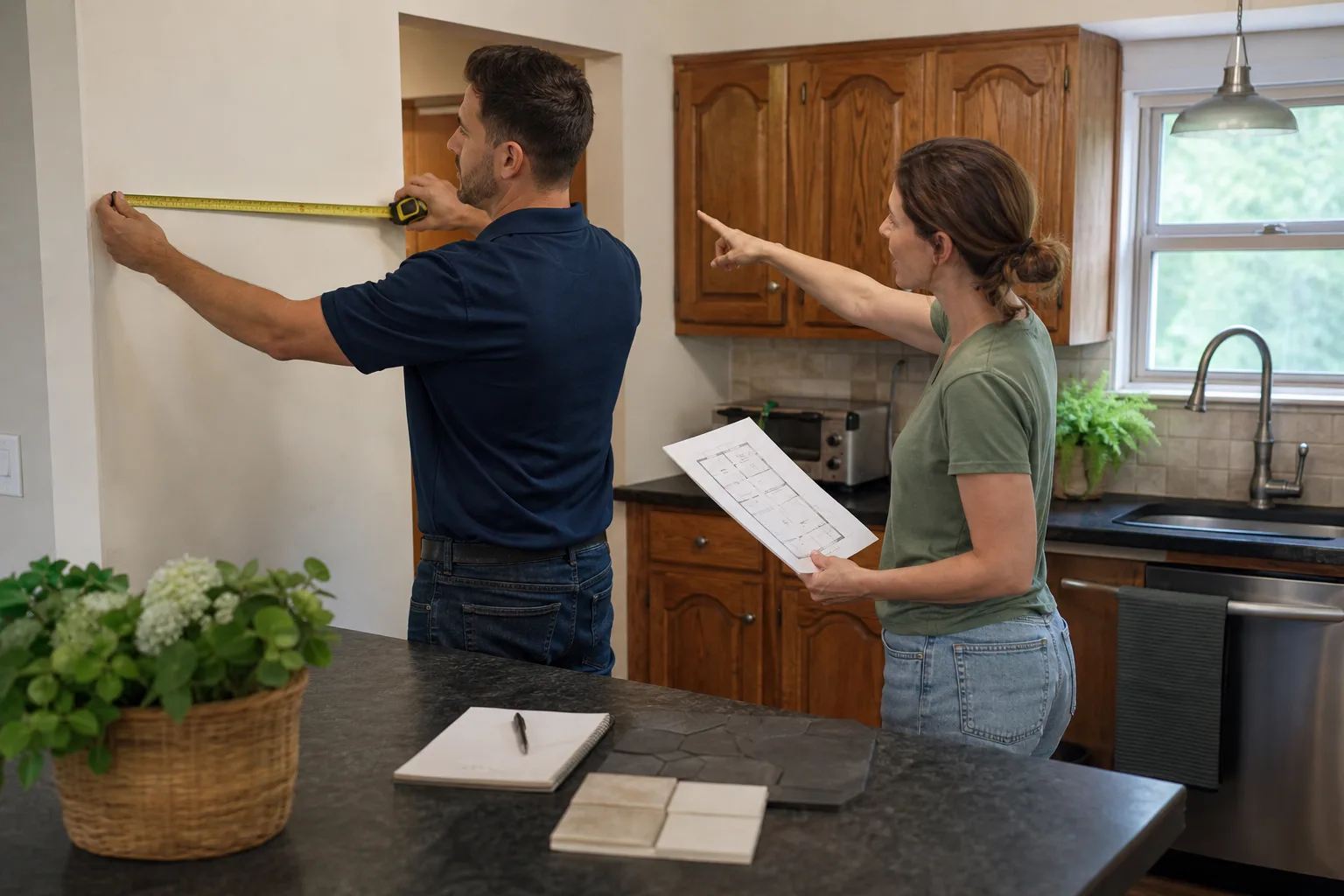
A scope of work that includes these six items is not adversarial. It’s the document that makes everything else work. When we write a scope for a Home Remodeling in Riverside, we sit down with the homeowner and walk through it line by line before they sign. You should expect the same from any contractor you’re considering.
How to Vet a Contractor’s Subcontractor Relationships
A general contractor’s insurance does not automatically cover an unlicensed subcontractor’s work. This is one of the most expensive misconceptions in residential construction. If an unlicensed sub damages your property or does defective work, your recourse against the general’s policy may be denied because the general hired outside the bounds of the policy’s terms. In California, workers’ compensation coverage is also required for any contractor with employees – and a sub who is a “1099 independent contractor” with no workers’ comp is a liability that can land on your property.
Here’s how to vet a contractor’s sub relationships before you sign:
- Ask for a written sub roster. Every sub who will work on your project should be listed by company name, license number, classification, and insurance carrier. A general who says “I use whoever’s available” has just told you they don’t control their own job site.
- Verify each sub’s license on the CSLB website. This takes about 30 seconds per sub. Do it. In Riverside County, a meaningful share of homeowners who file complaints about remodeling work discover the actual work was performed by an unlicensed individual acting as a sub.
- Ask for proof of workers’ compensation coverage for every sub. If a sub gets hurt on your property and has no workers’ comp, the claim can come to your homeowners insurance. Your premiums go up. That’s the best-case outcome.
- Require the general to be the single point of payment. You write checks only to the general contractor. If the general asks you to pay subs directly, walk away. That structure exists to shift liability away from the general and onto you.
- Confirm lien release language. The contract should state that the general will provide signed conditional and unconditional lien releases from every sub and material supplier as payments are made. This protects your property from a mechanic’s lien filed by a sub who didn’t get paid – even if you paid the general in full. Riverside County records show mechanic’s liens filed against homeowners long after the work was finished, often by material suppliers the homeowner never met.
We run background checks on every technician and sub who walks onto a Riverside job site. Identity and conduct standards are set at the Garrison Partners level – they’re not left to individual job sites. You know exactly who is walking through your door before the crew arrives.
Permit Responsibility: Whose Name Goes on the Permit and Why It Matters
This is the question that determines who is legally liable for code compliance: whose name goes on the building permit? The answer should be the contractor’s name – not yours – and here’s why it matters. The permit holder is the party legally responsible for the work meeting code. If the permit is in your name and the work fails inspection, you are the one who must correct it. If the permit is in the contractor’s name and the work fails, the contractor is on the hook.
Some contractors will ask the homeowner to pull the permit themselves. The reasoning is usually cost – the contractor doesn’t want to pay the permit fee, or doesn’t want their name associated with the project. Neither reason is good for you. A contractor who pulls the permit in their own name is telling you they stand behind their work’s compliance. A contractor who asks you to pull the permit is telling you they don’t want the legal exposure.
Ask these exact questions before signing:
- “Will you pull the permit in your name, or will I be listed as the permit holder?”
- “Will the permit fees be itemized in the contract?”
- “Who schedules the inspections, and who is present when the inspector arrives?”
- “What happens if the work fails inspection – who pays for the corrections?”
- “Will I receive a copy of the signed final inspection card before I make final payment?”
In the City of Riverside, permits for remodeling work must be pulled by a licensed contractor for most scopes – homeowners can sometimes pull their own permits for simple work, but a contractor performing the work should hold the permit. Don’t let a contractor talk you into fronting the permit in your own name. The permit is the legal instrument that ties the contractor to code compliance. That’s the point of the system.
What a Real Written Guarantee Looks Like
Most contractor “warranties” are verbal promises that disappear the moment the final check clears. A real guarantee is written, specific, and has a clear term and a clear remedy. Here’s what to look for.
A written guarantee should state, in plain language: the exact term of the guarantee (one year, two years, five years), what specific work and materials are covered, what is excluded, and what the remedy is – who fixes it, who pays, and how quickly. If the contractor hands you a sentence that says “all work guaranteed,” that’s not a guarantee. That’s a sentence.
Bradford Remodeling Co Riverside operates under the 365-Day Done Right Promise. Every completed project carries a full-year written guarantee. If the work fails inside that window, we come back and correct it at no charge. That’s the guarantee, written on the contract, before any payment is made. No verbal promises. The document is the guarantee.
When you’re comparing contractors, don’t ask “Do you guarantee your work?” Every contractor says yes. Ask “Will you write the guarantee into the contract, with the term, the coverage, and the remedy stated?” Watch what happens next. A contractor who squirms at that question is revealing something important about how they do business. A contractor who says “Of course – and here’s what it says” is the one you can work with.
Red Flags That Signal Trouble Before You Sign
We’ve been working in Riverside since 2004, and we’ve seen the patterns that predict a bad remodeling experience. These red flags appear before the first tool comes out, if you know what to look for.
- The bid is dramatically lower than every other bid. A contractor who underbids by 30% or more is either cutting corners you can’t see yet, or planning to make up the difference in change orders. Neither ends well. In Riverside’s competitive market, legitimate bids for the same scope should land within 10-15% of each other.
- The contractor won’t put the number in writing before starting. “We’ll work something out” is not a pricing strategy. It’s a strategy for ambushing you at the door. A written price before work starts is non-negotiable. We’ve never started a job without one, and neither should you.
- The contractor asks you to pull the permit. Covered earlier – the permit in your name makes you legally responsible for code compliance. A contractor who wants this arrangement knows exactly what they’re doing.
- The down payment request exceeds $1,000 or 10%. This is a direct violation of California law. No exceptions. If a contractor asks for more, report them to the CSLB and find someone else.
- The contractor can’t name their subs. A general who can’t tell you who’s doing the electrical work before you sign won’t suddenly gain that information after you’ve paid. A real contractor has a documented roster of subs, scheduled in advance.
- The guarantee is verbal. If it’s not in writing, it doesn’t exist. Every contractor says they “stand behind their work” until the work fails and they don’t. Get it in the contract.
What “Squared Away” Looks Like at Job Close
Here’s what a properly closed job looks like, step by step:
- Final inspection passes. The City of Riverside inspector signs off, and you hold a copy of the signed final inspection card in your hand before you write the final check.
- The site is clean. Debris is hauled, the dumpster is gone, surfaces are wiped down, and your home is in the condition you’d expect from a crew that respects the place. Riverside wind can spread construction dust across a neighborhood – a responsible crew contains it.
- Joint punch list completed. You and the contractor walk the project together, note every remaining item, and every item is corrected. Nothing is “good enough” unless it’s actually right.
- Lien releases in hand. You have signed conditional and unconditional lien releases from every sub and supplier, so no one can file a mechanic’s lien against your property.
- Signed written guarantee in your hand. The 365-Day Done Right Promise, or your contractor’s equivalent, is written on paper, signed, and delivered. Not emailed later. In your hand at final walkthrough.
- Final payment made, and only then. You write the last check when all of the above is true. That’s the discipline that protects you.
That’s what “squared away” means. Clean site, documented scope, signed written guarantee in the homeowner’s hand. If your contractor can’t describe what their job-close process looks like in this much detail, you’ve learned something useful.
Common Mistakes to Avoid
- Signing a contract with a vague scope of work. “Remodel kitchen” is a starting point, not a contract. If your scope doesn’t specify materials by brand and model, substrate repair rates, and punch-list process, you’ve signed a blank check.
- Paying a down payment over the legal maximum. California caps the deposit at 10% or $1,000. A contractor who asks for more is violating state law, and you should treat that as disqualifying.
- Letting the contractor put your name on the permit. The permit holder owns code compliance liability. That’s a burden the contractor should carry, not you.
- Skipping the sub vetting. A general’s insurance policy does not automatically cover an unlicensed sub’s work. Verify every sub’s license and workers’ comp before they set foot on your property.
- Accepting a verbal guarantee. Guarantees are writing or they’re nothing. Demand the term, the coverage, and the remedy in the contract.
- Making final payment before the punch list is done. Once the final check clears, your leverage is gone. Final payment comes last – after the inspection passes, the site is clean, and the written guarantee is in your hand.
- Hiring based on the lowest bid without asking why it’s low. Riverside’s market is competitive, and legitimate bids cluster within a narrow range. A bid 30% below the field is a red flag, not a bargain.
See the difference
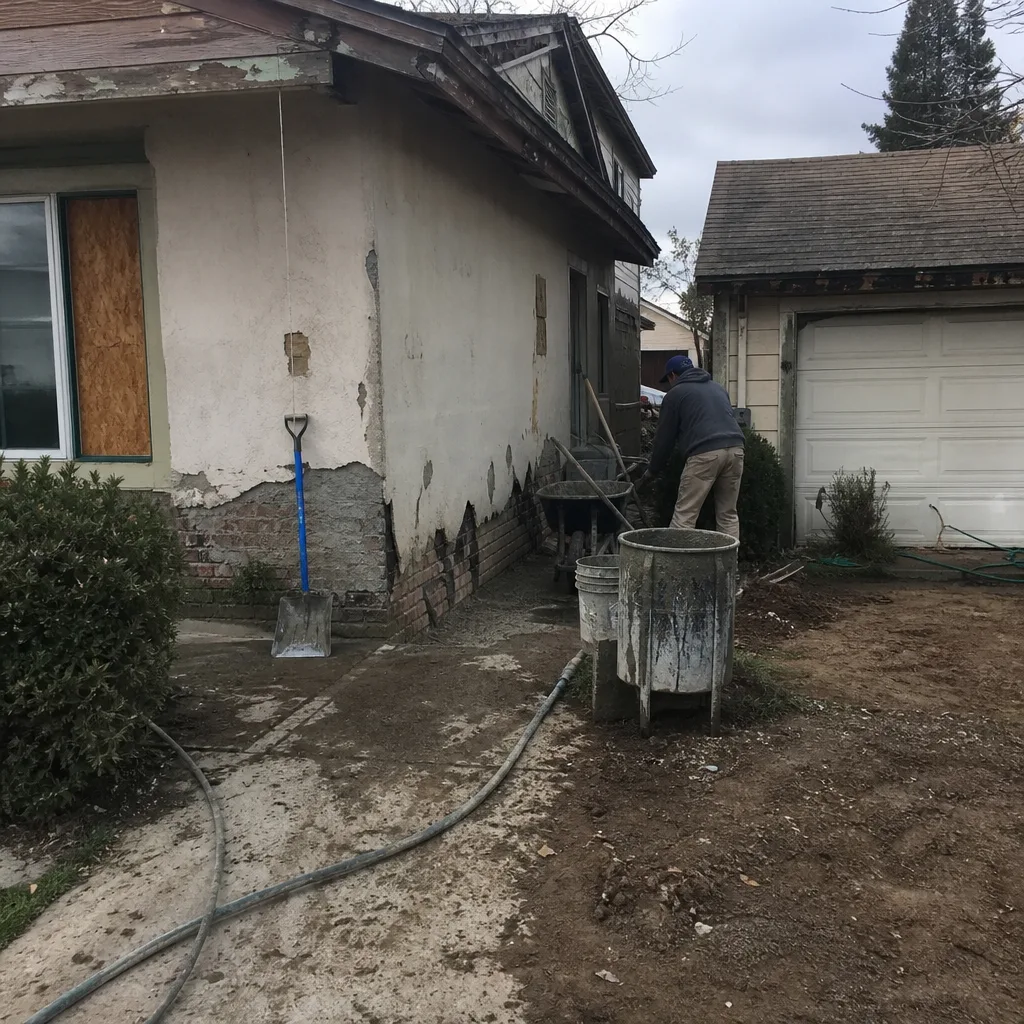 Before
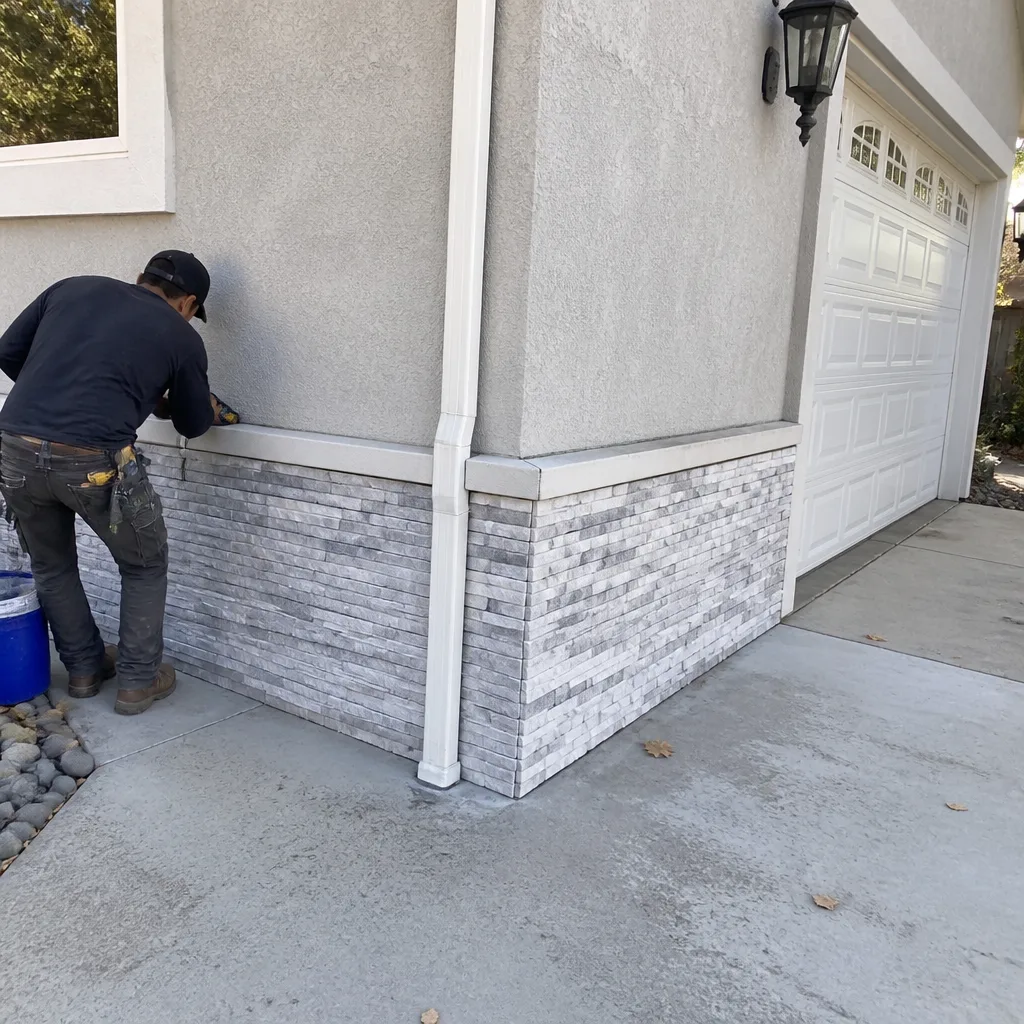 After
After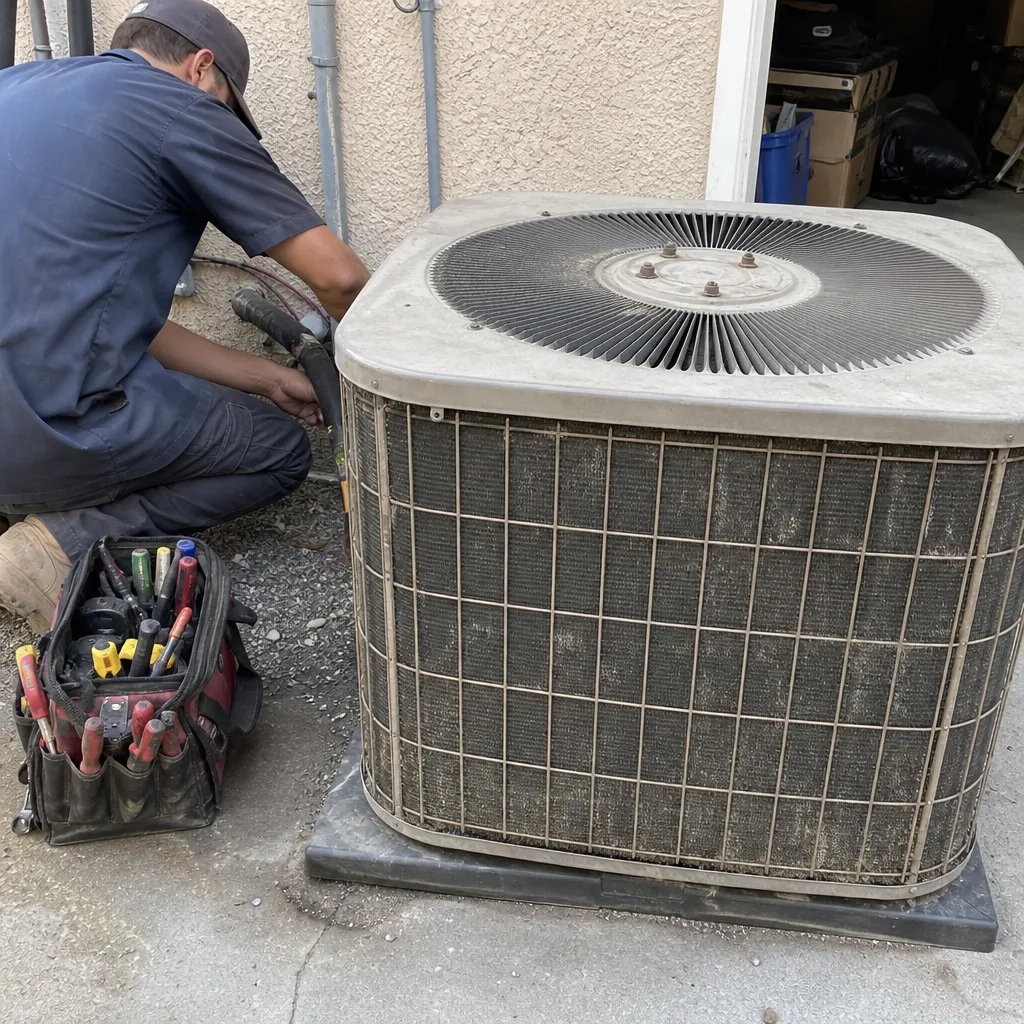 Before
 After
After Before
 After
AfterWhen to Call a Professional
Some projects you can reasonably tackle yourself. Replacing a faucet, painting a room, swapping a light fixture – those are weekend jobs. This guide is about the projects where the stakes are different. If your project involves moving walls, adding square footage, altering the building envelope, or touching the plumbing, electrical, or mechanical systems, you need a licensed contractor. If the work requires a permit – and most structural work in Riverside does – you need a contractor who will pull it in their own name and stand behind the code compliance. If your project involves high-tension materials, gas lines, or structural loads, get a professional. The cost of doing it wrong is measured in tens of thousands of dollars. Bradford Remodeling Co Riverside offers free estimates in Riverside – call (424) 567-8472.
Frequently Asked Questions

Go to the California Contractors State License Board website – cslb.ca.gov – and enter the contractor’s name or license number. In 30 seconds you can confirm the license is current, see the classification, check for any disciplinary actions, and verify the contractor’s bond. This is the first step, not the last – a valid license is the floor, not the finish line. Then ask about the specific classification for your scope, the sub roster, and the written guarantee. Call (424) 567-8472 if you want to work with a contractor who puts all of this in writing.
California law caps the down payment on a home improvement contract at 10% of the project total or $1,000, whichever is less. Any contractor who asks for more at signing is violating Business and Professions Code section 7159. After the deposit, all subsequent payments should be tied to completed, verified milestones – never to calendar dates – and you should retain 10-15% of the contract value until the punch list is resolved and the final inspection passes.
A B-General Building license authorizes a contractor to perform or oversee work involving two or more unrelated trades on a single project – that’s the right license for a kitchen or whole-home remodel. Specialty classifications cover specific trades: C-36 for plumbing, C-10 for electrical, C-8 for concrete, C-54 for tile and stone. A B-General can hire specialty subs, but the subs must carry their own classifications – and their own insurance. Hiring a B-General to personally perform specialty work they’re not classified for creates a liability gap on your project.
The contractor’s name should go on the permit. The person or company named on the permit is legally responsible for the work meeting code. If your name is on the permit and the work fails inspection, you’re the one who must correct it. If the contractor’s name is on the permit, they carry that liability. A contractor who asks you to pull the permit in your own name is trying to shift legal exposure onto you. Don’t accept it.
Make the final payment only after four things are true: the City of Riverside’s final inspection has passed and you hold the signed inspection card; the job site is clean and debris-free; every item on the joint punch list has been corrected; and you hold a signed written guarantee in your hand. Final payment is your last piece of leverage – don’t give it up before the work is actually done. Call (424) 567-8472 for a free estimate from a contractor who structures the payment schedule this way, in writing, every time.
Generally no. A general contractor’s insurance policy covers the general’s own work and typically requires that any subs be properly licensed. If an unlicensed sub damages your property or performs defective work, your claim against the general’s policy may be denied. Additionally, an unlicensed sub without workers’ compensation coverage creates liability that can fall on your homeowners insurance if the sub is injured on your property. Always verify every sub’s license and workers’ comp before they set foot on site.
Riverside’s inland Southern California climate – hot, dry summers and occasional heavy winter rain – places specific demands on construction materials and methods. Exterior work needs proper flashing and water management details to handle the rare but intense storms. Stucco and siding must be installed with adequate ventilation to prevent trapped moisture, and roofing materials should be specified for high UV exposure. A contractor who works regularly in Riverside understands these conditions. One who treats Riverside like any other market is more likely to miss them.
The Bottom Line
Hiring a construction contractor in Riverside comes down to this: verify the license classification matches your scope, cap the down payment at 10% or $1,000, structure every draw against completed milestones, demand a scope of work specific enough that every material has a brand name and every phase has a definition, vet every subcontractor’s license and insurance, make sure the permit goes in the contractor’s name, and don’t pay final until the guarantee is written and in your hand. That’s the discipline that separates a contractor who looks trustworthy from one who is. The Garrison Standard exists because we believe these things should be written down, not promised. Explore more guides & resources to protect your investment. If you’re planning a remodel in Riverside, call (424) 567-8472 for a free estimate. We’ll put the price, the scope, and the guarantee in writing before any work starts.
Written by Curtis Lane, Owner at Bradford Remodeling Co Riverside, serving Riverside since 2004.